
“He was not bone and feather but a perfect idea of freedom and flight, limited by nothing at all.” – Jonathan Livingston Seagull.
Historians, when attempting to assemble the past, often find themselves speculating. Only in retrospect do we recognize the true importance of historical events. It is important to record history from those who have witnessed or been part of significant moments. Otherwise, the subtleties of those moments can be lost. This site provides reliable information that helps to clarify what is currently known about the origins of early frisbee play and the first flying disc sports. This site also features a timeline of events detailing the introduction of the Frisbee and all the modern disc sports.
The Counterculture and Early Frisbee Pioneers.
“I do not exist to impress the world. I exist to live my life in a way that will make me happy.”
When discussing frisbee and disc sports, people use words like hippie and counterculture. However, few have delved into the origins of these sports and how they came to be. Contrary to popular belief, it wasn’t just a matter of the counterculture and hippies creating an alternative to sports. Rather, it was alternative-minded athletes inventing new sports using flying discs.
“As a non-competitive athletic play in the 1960s, playing frisbee was the perfect activity and athletic alternative for the counterculture.”
In the 1960s, young people who felt alienated from social norms formed a counterculture in search of alternatives. The forms of escape and resistance manifest in many ways, including social activism, alternative lifestyles, experimental living through foods, dress, music, and alternative recreational activities, including throwing a Frisbee.

The popularity of playing with a Frisbee in the countercultural community was driven by young people with long hair, no shoes, and wearing tie-dye clothing, tossing Frisbees in parks, on campuses, and at music festivals. During the 1970s, modern frisbee sports were created and played by alternative disc athletes, as an alternative to traditional ball sports.
Upon further examination, it became clear that the initial assumptions about Frisbee players were inaccurate. Early Frisbee players were considered non-athletic hippies who couldn’t play traditional sports. However, this was not the case. Many early Frisbee disc athletes were former ball athletes who embraced the alternative culture of the 1960s.
Playing with a Frisbee in the 1950s and ’60s was not initially competitive, but rather about enjoying the activity of throwing a flying disc. As the sport progressed, skilled disc athletes began to organize and compete in early Frisbee competitions.
The Frisbee Experience.
“When a ball dreams, it dreams it’s a Frisbee.”– Stancil Johnson.
Playing with a flying disc is a different experience from playing with a ball’s predictable, limited trajectory. The disc’s flying qualities capture our imagination and fascination with flight. People frequently dream that they are flying; no one ever dreams of rolling or bouncing around like a ball.
This sensation experienced by throwing a flying disc created the Frisbee fad of the 1950s-60s. This continues to be the primary motivation for disc sports athletes today. Jared Kass, an early Frisbee football/ultimate pioneer, once tried to explain how he felt when throwing and catching a flying disc:” I leaped up and said, ‘This is the ultimate’ and felt and experienced it.” The ultimate play that Kass felt was the flying sensation that players experience when throwing and catching a flying disc. Aside from a set of rules and competitive scoring, every disc sport includes this additional playing sensation. History of Ultimate.
Freestyle – the First Frisbee Play.
“Play catch, invent games. To fly, flip away backhanded; flat flip flies straight; tilted flip curves-experiment!” – Wham-O Frisbee.
By the 1960s, instructions to enhance Frisbee play were inscribed on the back, encouraging players to “PLAY CATCH and EXPERIMENT” with various throwing and catching methods. These instructions were for what was already the first Frisbee play. The instructions marked the inception of “freestyle,” setting the stage for all subsequent disc sports.

“Freestyle is the Mother of all disc sports.”
Beginning in the 1950s, the initial concept for the newly invented flying disc involved simply throwing it to watch it fly.
The first modern disc sport, guts, emerged from the Healy brothers’ informal activity of tossing and catching the innovative flying disc during family picnics in the late 1950s. Before the advent of all modern disc sports, there was throw-and-catch freestyle with a continuous flow as the goal.
“The current style of nail-delay freestyle play does not accurately reflect its historical role as the predecessor that led to all the throw-and-catch-flying disc sports.”
The origins of all modern disc sports stem from the history and evolution of early frisbee freestyle play. Guts, disc golf, and ultimate have largely adopted the playing formats of traditional ball sports, replacing the ball with a flying disc. These disc sports all utilize throwing techniques invented and developed by early freestylers. Although disc golf and ultimate are becoming increasingly popular, the flying disc was not invented solely to be a better ball. Before modern disc sports, when early freestylers took a break from playing freestyle, they often leisurely engaged in other disc sports, like guts, pickup ultimate, and Frisbee golf. In the beginning, freestyling with a flying disc was a highly skilled activity that involved unique catching and complex throwing challenges. The freestyle throwing skill requirements for today’s modern disc sports could be used to define and categorize all disc sports as “freestyle throwing sports.” History of Freestyle.
1960s Frisbee and Disc Sports First Disc Athletes.
“Walter Fredrick Morrison invented the flying disc, Wham-O marketed the Frisbee as a flying toy, and alternative athletes invented disc sports.”
There is a common misconception that early frisbee players were primarily dope-smoking hippies, and that genuine athletes later came along and took the sport from them, creating modern disc sports. This misconception is entirely false.
“Some of the greatest Frisbee players of all time were the early alternative disc athletes from the 1960s and 70s who played all the disc sports.”
All sports, including disc sports, have their share of non-athletes who play recreationally. The first disc athletes considered alternative in the beginning days of Frisbee and disc sports were excellent athletes. As can be seen in early films, these frisbee pioneers could match up with any of today’s top players in any disc sport or event.
Experimenting with ‘throw and catch’ freestyle, at the beginning of disc play in the 1950s-60s, predates today’s popular modern disc sports. Freestyle competitions and the touring freestyle performers in the 1970s were the beginning of showing people that the Frisbee was more than just a toy to be used for recreation.
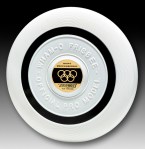
By the 1960s, while the Frisbee was still considered a toy and a fad, Frisbee’s first exceptional disc athletes were beginning to appear and get noticed.
Beginning their frisbee play in Michigan in the 1960s, early disc sports pioneers Ken Westerfield and Jim Kenner played freestyle and object-hole disc golf on a course they designed in Toronto’s Queen’s Park. In 1971, already performing exhibitions as Frisbee Professionals, began touring and performing Frisbee demonstrations for Irwin Toy. Ken and Jim also created early annual Frisbee competitions in Toronto and Vancouver, BC.
During that same period, Victor Malafronte and John Weyand of the Berkeley Frisbee Group (BFG) also raised Frisbee tossing and catching to a delicate art form of flowing throws and receptions. Also playing object-hole disc golf on a UC Berkeley campus course.
In the 1970s, Vaughn Frick, John Sappington, and Scott Dickson were doing creative trick throws and fancy frisbee catching on the campus of the University of Michigan.
Gerry Lynas and Kerry Kollmar were influential early freestylers in New York. They initiated play in Central Park and Washington Square, mentoring future freestyle champions.
Dan Roddick’s father, Papa Jack, gave 5-year-old Danny one of Fred Morrison’s original plastic flying saucer discs for Christmas in 1953. That Flyin’ Saucer became part of their regular family fun activities. By the early 1970s, Dan Roddick included individual disc events at his Pennsylvania and New York State Frisbee Championships. Other disc sports athletes were the early guts players at the International Frisbee Tournament (IFT) in Northern Michigan.

The IFA Newsletter helped to bring these groups together. It led Victor Malafronte to the 1973 Canadian Open Frisbee Championships in Toronto, where he met Ken Westerfield and Jim Kenner. In response to meeting Victor, Ken trekked to the West Coast later that year to meet and play Frisbee with the Berkeley Frisbee Group (BFG) players. They exchanged volumes of information about Frisbee styles, techniques, and activities.
The IFA and its newsletter helped the University of Michigan guys get in contact with the Humbly Guts team and get involved with the IFT. They met even more frisbee players like John Connelly, Alan Blake, and Tom Cleworth of the Highland Avenue Aces guts team. The exchange of ideas about creative throwing and catching grew substantially during this period. Dan “Stork” Roddick met Spyder Wills at Laguna Beach for some Frisbee play and was highly influenced by Spyder’s graceful playing style.
The players referenced above were some of the first to be recognized as the best frisbee players at the introduction of modern disc sports. – Decade Awards – Top Players Before 1976.
Freestylers Were the Early Top Disc Athletes.
“The most thrilling aspect of any disc sport is the satisfaction of watching the Frisbee fly exactly as you intended.”
From the early 1970s, multi-event tournaments centered around the popular freestyle events. Freestyle disc athletes who played other disc sports presented the first excellent disc skills in these new disc sports.
“Freestyle produced some of the earliest skilled disc athletes for all the disc sports.”
Because today’s freestyle focuses mostly on the nail delay, it doesn’t get the throwing legacy it deserves. History acknowledges that early freestyle specialists in the 1960s and 70s invented the throwing techniques used in today’s popular disc sports. In the early days when freestylers transitioned to playing other disc sports, such as ultimate and disc golf, they brought their freestyle throwing and catching skills. As a result, freestylers who participated in other disc sports had an advantage over players with no freestyle experience.
These notable freestyle disc athletes were also competitive superstars for all the early disc sports. – Doug Corea, Dave Marini, Jens, and Erwin Velasquez, Jeff Jorgenson, Tom Kennedy, John Weyand, Victor Malafronte, Tom Shepard, Steve Gottlieb, Johnny Jewell, John Mortimer, Gary Perlberg, Jeff Soto, Tom McRann, Danny McGinnis, Dan Roddick, Irv Kalb, Don Vaughn, Don “Rocket” Hoskins, Michael “Muck” Young, John Bird, Jon Cohn, Jim Herrick, Cyndi Birch, Michelle Pezzoli, Monika Lou, Bill King, Jim Brown, John Anthony, Tom Wingo, Moises Barbara Alfaro, Krae Van Sickle, Mark Danna, Kerry Kollmar, Peter Bloeme, Freddie Haft, John Kirkland, Ken Westerfield, Mary Kathron, Gail McColl, Jim Kenner, John Connelly, Tom Cleworth, Bruce Koger, Jose Montalvo, Chau Rottman, Alan Blake, Marie Murphy, John Sappington, Scott Dickson, Vaughn Frick, Jo Cahow, “Igor” Harper, Don Cain, Ronnie Dorn, Jamie Moldt, Bill O’Dell, Gerry Lynas, and Tom Monroe.
The Frisbee Family and their Spirit of Play.

“Having referees leads to testing the limits, but when it comes to matters of one’s honor, it becomes a different story.”
During the days of playing frisbee and the first disc sports, the tournament-touring community of disc athletes considered themselves a Frisbee Family.
“It was the play that inspired early disc athletes.”
You cannot overstate the impact of alternative athletes from that era on the early development of disc sports. Being obsessed with winning at any cost wasn’t in their game. The early alternative disc athletes played hard but were never overly aggressive in play or attitude, especially in team disc sports like ultimate. The conduct of a player while competing was and still is as important as winning.
“Until 1978, the spirit of competitive conduct, which had yet to be officially defined or named, was more about the spirit of the disc athletes’ alternative to traditional sports competitions, than the actual disc sports.”
An athlete’s performance and spirit of play, which eventually was recognized and called Spirit of the Game for ultimate, evolved from the counterculture and alternative playing appeal for disc athletes in all the early disc sports. It was officially defined for ultimate and included in the 7th edition of the 1978 Official Rules for Ultimate. SOTG also has an Integrity Rule, where players are expected to call themselves when they commit a foul, giving the fouled player the option. In the AUDL, where referees are used, this option overrules calls made on the field by the referees and is used frequently during games. Ultimate also honors players and teams with Spirit Awards.
“A competition has many moments to be won or lost. The final score at the end of the game is only one of those moments.”
The first official recognition of an alternative competitive spirit in a disc sport.– All players are responsible for administering and adhering to the rules. Ultimate depends on the Spirit of the Game, which assigns the responsibility for fair play to every player. It is trusted that no player will intentionally break the rules; thus, there are no harsh penalties for breaches, but rather a method for resuming play in a manner that simulates what would most likely have occurred had there been no breach. Highly competitive play is encouraged, but should never sacrifice the mutual respect between players, adherence to the agreed-upon rules of the game, or the basic joy of play. – Ultimate’s Spirit of the Game (SOTG).
Early Frisbee Play and the beginning of Modern Disc Sports, the 1960s – 70s.
“The Frisbee was invented in the 1950s and gained popularity as a recreation in the 1960s. As players developed their throwing skills, it was inevitable that former ball-minded athletes would choose to replace the ball in various sports with the newly invented flying disc.”
According to multiple sources, such as The Complete Book of Frisbee, Tin Lid Golf was played in 1926 by students in Bladworth, Saskatchewan, Canada.
It was the first organized game, uniformly played with a flying disc-like object, and is the earliest record of a pre-modern flying disc game. In 1926, Ronald Gibson and a group of his Bladworth Elementary School buddies played a game of throwing tin lids into 4-foot-wide circles drawn into sandy patches on their school grounds. They called the game Tin Lid Golf and played fairly regularly. However, after they grew older, the game ended, and they went their separate ways.
We don’t have the historical connecting dots from Tin Lid Golf 1926 to the beginning of modern disc sports, but it doesn’t mean they were not there. As mentioned in the introduction, uncovering history from the future can be challenging. It is possible that someone who used to play Bladworth Tin Lid Golf moved to the East Coast of the United States for some reason and introduced the game of pie tin tossing at prestigious universities such as Yale and other Ivy League institutions. However, we do not have any evidence to support this. – Pie Tin Tossing at Yale.
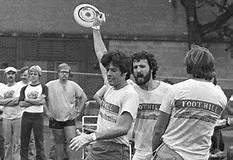
The November 1969 “All Comers” meet in Brookside Park in Pasadena, California, advertised a “Style throwing and catching” activity area and also a “Free exercise” activity area beside the other more traditional Frisbee events like guts, distance, and accuracy. There were a few guts and distance tournaments in the 1960s, but Frisbee and modern disc sports were invented, developed, and promoted in the U.S. and Canada during the early 1970s.
The IFA Newsletter made its debut in 1968. Stories of Frisbee activities, including stories about people who could throw a Frisbee in different ways and could make fancy trick catches, circulated. The Frisbee community found out about the early Frisbee tournaments. The International Frisbee Tournament (IFT), Guts Frisbee Championships in the Upper Peninsula of Michigan, the Canadian Open Frisbee Championships in Toronto, and Wham-O’s National Junior Championships.
In 1970, the first object-target disc golf courses were designed in Rochester, NY, Toronto, ON, and Berkeley, CA. Jim Palmeri established an 18-hole object-target course and, in the early 1970s, began producing local disc golf competitions in Rochester, NY. Americans Ken Westerfield and Jim Kenner designed an object-target disc golf course in Queen’s Park, Toronto. Ken and Jim introduced disc golf competitions with other disc sports at their Canadian Open Frisbee Championships in Toronto and Vancouver, BC. The Berkeley Frisbee Group established its object-target disc golf course on the UC Berkeley Campus in California. Today, disc golf is played in over 40 countries with a popular PDGA professional tour.

Modern Disc Sports Pioneers and Competitions in the 1970s.
“Every person, all the events of your life are there because you have drawn them there. What you choose to do with them is up to you.” – Richard Bach.
Organized modern disc sports, beginning with promotional efforts from Wham-O (U.S.A.) and Irwin Toy (Canada), a few tournaments, and professionals using Frisbee show tours to perform and promote disc sports at universities, fairs, and sporting events.
The beginning of modern disc sports began with the early player pioneers and their multi-event tournaments, which, with a few exceptions, began nationally in the United States and Canada in 1974. The initial tournaments were more about discovery over competition, allowing players from across the country to use these events to learn and share knowledge about their new sport.
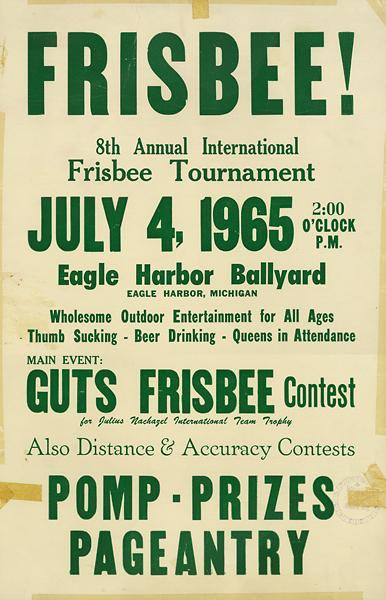
The first Frisbee competition started with the Healy family and the International Frisbee Tournament (IFT) in Eagle Harbor, Michigan. Other early tournaments included Ken Westerfield and Jim Kenner’s Canadian Open Frisbee Championships held in Toronto (1972) and Vancouver, BC (1974), as well as Dan Roddick and Flash Kingsley’s Octad and Jersey Jam in New Brunswick, NJ (1974). Jim Palmeri’s American Flying Disc Open (AFDO) took place in Rochester, NY (1974). Ed Headrick and Dan Roddick hosted the Wham-O World Frisbee Championships at the Rose Bowl in Pasadena, CA (1974). The Humblies Guts Team presented the Indoor Frisbee Festival at the University of Michigan in Ann Arbor, MI. These events marked the beginning of multi-event disc sports competitions and were pivotal for the first disc athletes, laying the foundation for all disc sports. Guts, freestyle, disc golf, ultimate, double disc court (DDC), and several Frisbee individual events like accuracy, distance, MTA, TRC, and discathon. Not only did these early multi-event tournaments present all of the first modern disc sports to the world, but the tournament directors were also the pioneer founders of the first modern disc sports and events.
Media and Promotion.
In the early to mid-1970s, several player frisbee publications became available to help promote disc sports and tournament events. Beginning in 1976, Frisbee World Magazine with Dan “Stork” Roddick as the editor. In the 1980s, Chris Lowcock published DisKraze Magazine in Canada. These publications provided tournament dates, competition finishes, player bios, and stories. This helped to provide the information needed for the early growth of frisbee and flying disc sports.
A few posters from landmark historical disc sports tournaments from the 1970s -80s
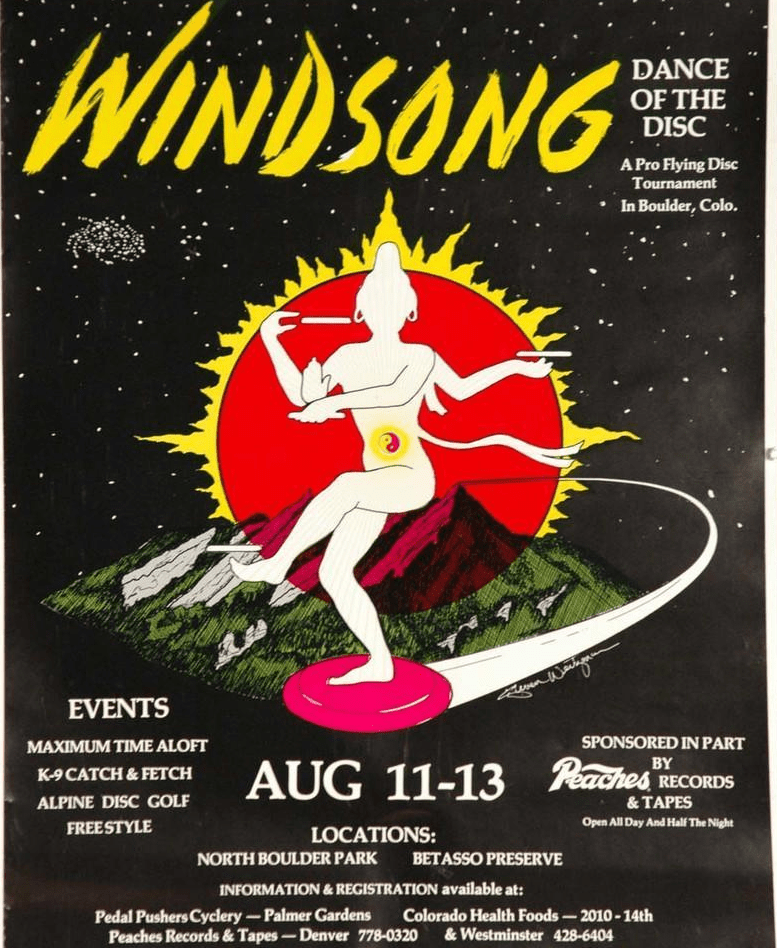


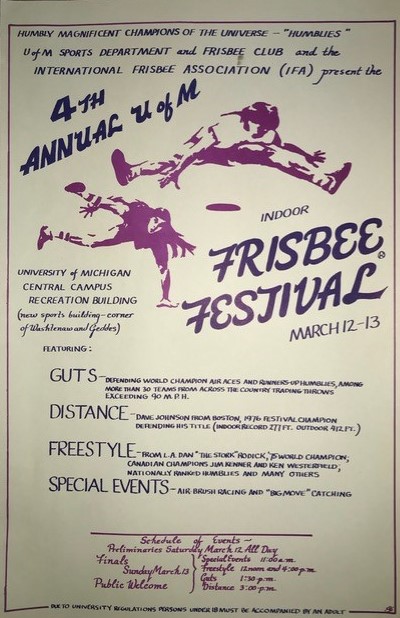
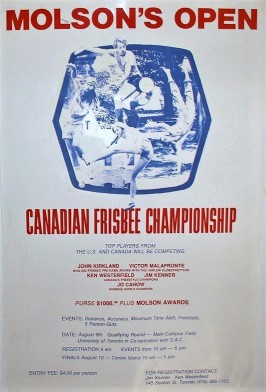
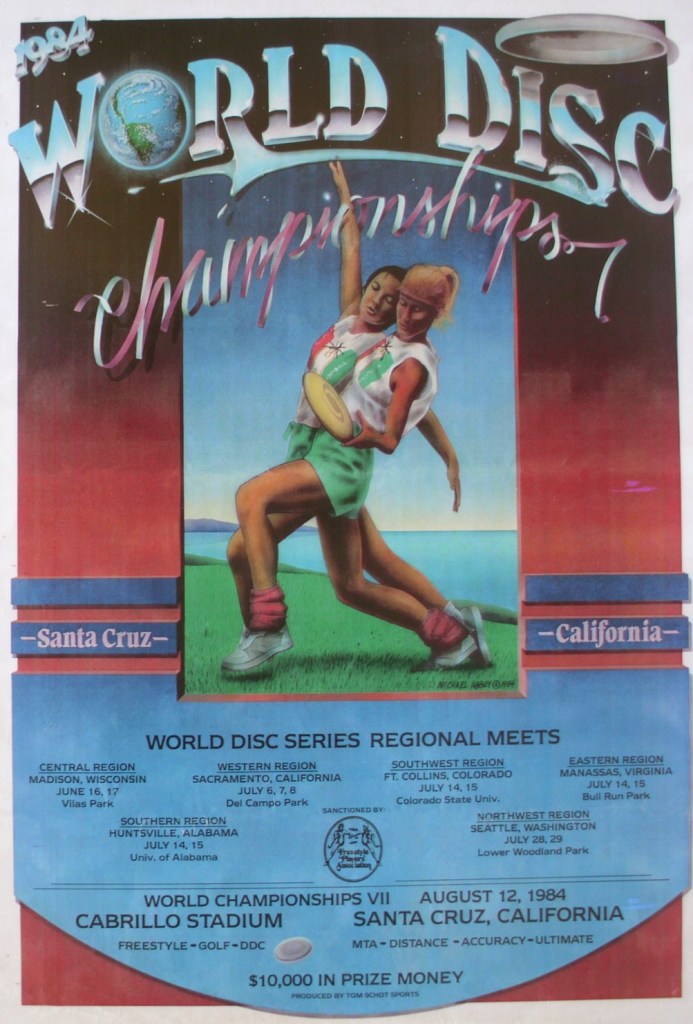
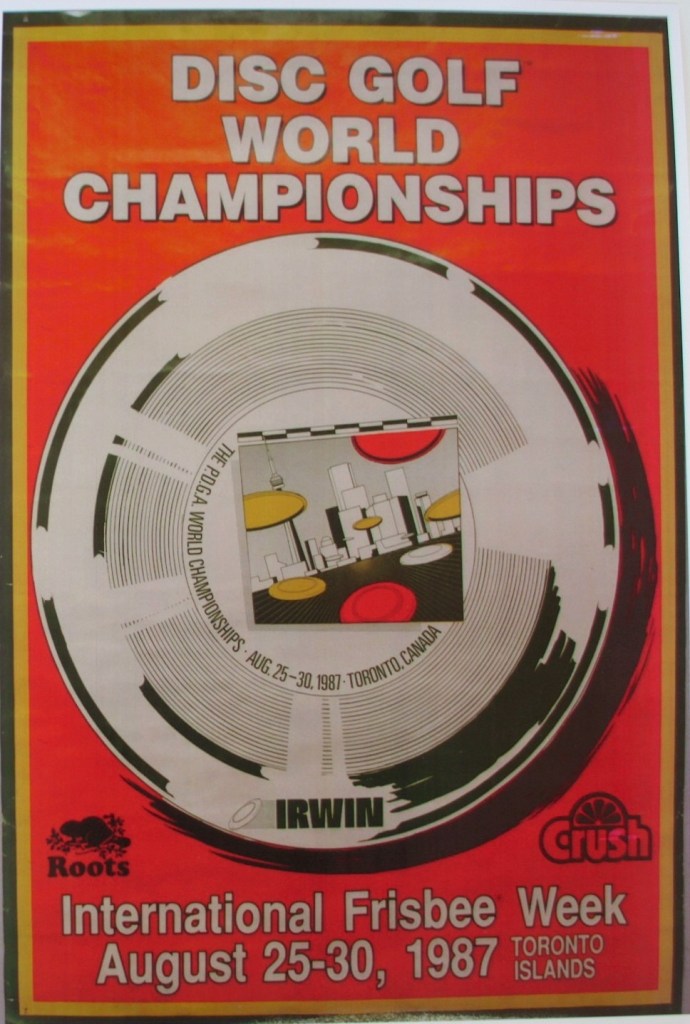
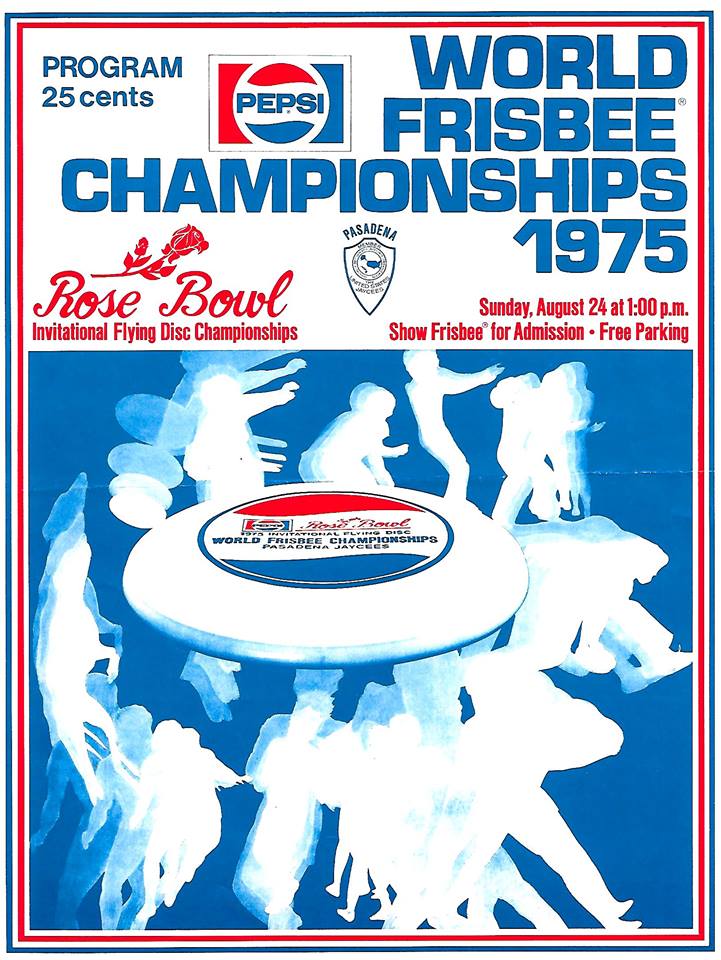
Founders – Pioneers – First Events – Organizations.
The players, promoters, and events that shaped the transition from playing with a flying toy to modern disc sports.
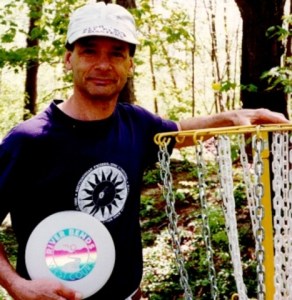
The Healy family (guts frisbee, and IFT). Ken Westerfield (ultimate, freestyle, disc golf, Canadian Open Frisbee Championships, Toronto, and Vancouver. Jim Kenner (Discraft, ultimate, disc golf, freestyle, Canadian Open Frisbee Championships, Toronto, and Vancouver. Jared Kass, Joel Silver, Bernard “Buzzy” Hellring, Jonny Hines, and Johnny Appleseed’s (ultimate). Tom Kennedy, Irv Kalb, and Dan Roddick (Ultimate Players Association). Dave Marini (Freestyle Players Association, FPA). Jim Palmeri (AFDO, disc golf, DDC, and freestyle). Dan Roddick (Octad, WFC, IFA, UPA, Frisbee World, and WFDF). Ed Headrick (Wham-O, IFA, WFC, and disc golf). Tom Monroe (Frisbee South events and disc golf). Tom Schot (disc golf and Santa Cruz World Disc Championships). These were Frisbee and disc sports’ earliest pioneers. Excelling with the Frisbee when it was still considered a toy, they produced the formats and competitive concepts through their tournaments and organizations that led to the modern disc sports we see today.
Touring Frisbee shows in the 1970s-80s.
Freestyle frisbee emerged as the first form of frisbee play, introducing a sense of novelty in the 1950s and 60s. In the 1970s, skilled players refined their abilities and began organizing Frisbee shows that eventually would tour the world. They showcased their skills at various events, including fairs, universities, shopping malls, and professional sporting events.
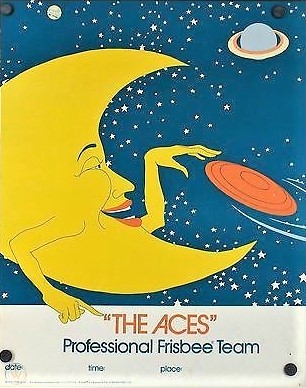
In 1971, the first Frisbee shows were with Ken Westerfeld and Jim Kenner, from the U.S., performing street shows in cities across Canada. In 1972, they signed with Irwin Toy, the Wham-O Frisbee licensee in Canada, to tour and promote the Frisbee. Also, that same year, Northern California players Mike and Bill Schneider toured for Wham-O Frisbee affiliates in Europe. These events marked the beginning of Frisbee professionals demonstrating the possibilities of playing with a flying disc.
In 1974, Molson Brewery signed Ken Westerfield and Jim Kenner to perform half-time frisbee shows, as the Molson Frisbee Team, at university basketball games. John Kirkland and Victor Malafronte began performing pre-game frisbee shows for the Harlem Globetrotters. Other touring frisbee shows from that period were Frisbee South, Good Times Professional Frisbee Show, Spinning Bees, Aces, Flying Aces, and The Jammers.
Wham-O (USA) and Irwin Toy (CANADA) organized several national and international Frisbee show tours. There were also sponsored traveling Frisbee shows for major companies like Coca-Cola, Orange Crush, Copper Tone, Molson, Labatt’s, Budweiser, and Lee Jeans. Company-sponsored show tours would reach millions of people in every city and small town across North America and eventually the World. The early frisbee freestyle shows deserve credit for their performances and publicity that brought awareness to this new age of flying disc sports.
Notable Events in Disc Sports History.
The early history of Frisbee events and the rise of modern disc sports is a shared timeline between the United States and Canada.
1926–The World’s first flying disc sport is Tin Lid Disc Golf, played in Canada. The games were held in Bladworth, Saskatchewan, using tin lids.
1940s–In response to discovering the fun of sailing tin lids, Fred Morrison invents and introduces the world’s first plastic flying saucers.
1958–International Frisbee Tournament (IFT Guts) in Eagle Harbor, Michigan.
1964–Wham-O makes the “Official Pro Model” to introduce the Frisbee as a flying disc to be used as a sport.
1964–1969 – George Sappenfield and Kevin Donnelly, recreation counselors, organized several frisbee golf events for children on playgrounds in southern California, using hula hoops as targets.
1966– Jared Kass and fellow Amherst students play early games of Frisbee football.
1968–Jared Kass, an instructor at Mount Hermon summer camp, taught his Frisbee game to Joel Silver. Silver and fellow students at Columbia High School wrote up the first set of rules for ultimate.
1969–The first ultimate game played at CHS is between the student council and the school newspaper staff.
1970–The first object-hole disc golf courses were designed in Rochester, NY, Toronto, ON, and Berkeley, CA.
1970–New Jersey high school graduates called Johnny Appleseeds to promote the sport of ultimate at their universities.
1972–Americans Ken Westerfield and Jim Kenner are contracted full-time by Irwin Toy to perform and promote the Frisbee and disc sports across Canada.
1972–Bill and Mike Schneider are hired by a German company to perform frisbee demonstrations in Europe.
1972–The Canadian Open Frisbee Championships in Toronto began presenting modern disc sports.
1972–The IFA Newsletter began in 1968 and, in the early 1970s, brought together the early pioneers of modern disc sports in the U.S. and Canada.
1974–The Flying Disc World newsletter, produced by Dan Roddick and Flash Kingsley, became the first independently published magazine for flying disc sports.
1974–First multi-event disc sports tournaments and competition tour for the first disc athletes. The Canadian Open Frisbee Championships, Toronto, ON, the Vancouver Open Frisbee Championships, Vancouver, BC, the Octad, New Brunswick, NJ, the American Flying Disc Open, AFDO, Rochester, NY, and the World Frisbee Championships (WFC) Rose Bowl, Pasadena, CA.
1974–Jim Kenner and Ken Westerfield began performing halftime Frisbee shows at university basketball games for several years as the Molson Frisbee Team.
1974–John Kirkland and Victor Malafronte perform Frisbee shows for the Harlem Globetrotters tour.
1974–The Rochester Frisbee Club hosts the first disc golf tournament of national scope.
1974–Freestyle Competitions begin. Canadian Open Frisbee Championships, Toronto, and Vancouver, BC.
1975–Installation of the first permanent disc golf course in Oak Grove Park, La Canada, California.
1975–Wham-O introduces the World Class 119g improved discs for competitive sports.
1975–Ultimate is introduced to the four big tournaments. Octad, AFDO, WFC, and Ultimates‘ first international appearance at the Canadian Open Frisbee Championships in Toronto, ON.
1975–World Class Frisbee signature disc for the U.S. and Canada.
1976–Wham-O introduced the North American Series (NAS) tour events to the US and Canada. Qualifying players for competing in the Rose Bowl World Frisbee Championships.
1976–Frisbee World Magazine is published by Wham-O with Dan Roddick as editor.
1976–Disc golf competitions begin at the Canadian Open Frisbee Championships in Toronto and Vancouver, BC.
1976–Ed Headrick invents the chain-style disc golf target and begins the Professional Disc Golf Association (PDGA).
1977–NAS events in Stanley Park, Vancouver, BC, Canada.
1977–The first PDGA tournaments are held simultaneously in Northern New Jersey and Mobile, Alabama. .1977–Mercer County Ultimate League (New Jersey).
1977–Northern California Ultimate Frisbee League (NCUFL).
1978–Discraft manufactures the Sport Disc in London, Ontario, Canada.
1978–The Freestyle Players Association was established with Dave Marini.
1978–Santa Cruz Flying Disc Championships.
1978-Spirit of the Game is recognized and included in the 7th edition of the 1978 Official Rules for Ultimate.
1979–The Ultimate Players Association is formed. Renamed USA Ultimate.
1979–The Toronto Ultimate Club (TUC).
1980–Canada’s first official 18-disc pole hole course is installed on the Toronto Islands.
1982–The PDGA becomes a player-run organization to formalize the rules of play and a disc golf tour.
1983–Innova-Champion Discs offers a new design for a golf disc with a beveled edge rim.
1987–PDGA World Disc Golf Championships – Toronto.
1987–The World Flying Disc Federation’s (WFDF) first overall competition is held in Fort Collins.
1991–World Ultimate Championships, Toronto.
1993–Lavone Wolfe established the Disc Golf Hall of Fame. Now called the World Disc Golf Hall of Fame.
1993–Ultimate Canada is formed.
2004–United States Ultimate Hall of Fame–USA Ultimate.
2011–Ultimate Canada Hall of Fame–Ultimate Canada.
2016–Freestyle Players Hall of Fame–Freestyle Players Association.
- A pictorial history of disc sports: Disc Sports History in Photographs
- History and awards: History of Disc Sports in Canada | Decade Awards | Origin of Spirit of the Game
- Instruction -Performance -Training: Ultimate Handling Skills Exercise | Ultimate Frisbee Power Huck and Pull | Ultimate United
- Players, Organizations, and resources: USA Ultimate | Ultimate Canada | PDGA | WFDF | Freestyle Players Association | FrisbeeGuru | Flying Disc Museum | Ultimate Rob

Next Articles:
History of Ultimate Frisbee
Disc Golf History
Freestyle Frisbee History
Guts Frisbee History
Note: This information was referenced and time-lined from disc sport historical and biographical articles, including U.S. and Canadian Disc Sports Hall of Fame inductions, Disc Sports Player Federations, and other historical resources. Frisbee and disc sports historians researched, wrote, and compiled this article. The history in this document may change as events and people are added.
Linking or reproduction in whole or part with proper linked crediting is permitted (discsportshistory.com).
Top feature photo: Kenyon College students playing with a Frisbee-like flying disc in Ohio, 1950.
Eliot Elisofon—The LIFE Picture Collection/Getty Images.
Top page photo collage: Frisbee World Magazines, 1976 -1982.
© 2025 Disc Sports History. All rights reserved.
 The History of Frisbee and Disc Sports