
“Ultimate came from Ivy League universities, prep schools, and rich kids at summer camps; freestyle came from the street. If Frisbee had a gang, they would be freestylers.” : )
Flying disc freestyle, also known as freestyle frisbee regarding the trademarked brand name, is a sport and performing art characterized by creative, acrobatic, and athletic maneuvers with a flying disc. Freestyle is performed individually or, more commonly, in pairs or groups, both competitively and recreationally.
The Freestyle Players Association (FPA) is the governing body of freestyle, dedicated to growing freestyle disc play as a lifetime recreation and competitive sport. The organization is involved in international tournaments, rankings, education grants, and promotional activities. Every year, the FPA holds a world championship with divisions in Open Pairs, Mixed Pairs, Open Co-op, and Women’s Pairs.
This article explores the history of freestyle, tracing its evolution from a counterculture pastime in the 1960s to a widely played global disc sport.
Freestyle – the First Frisbee-Play.
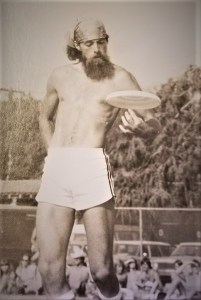
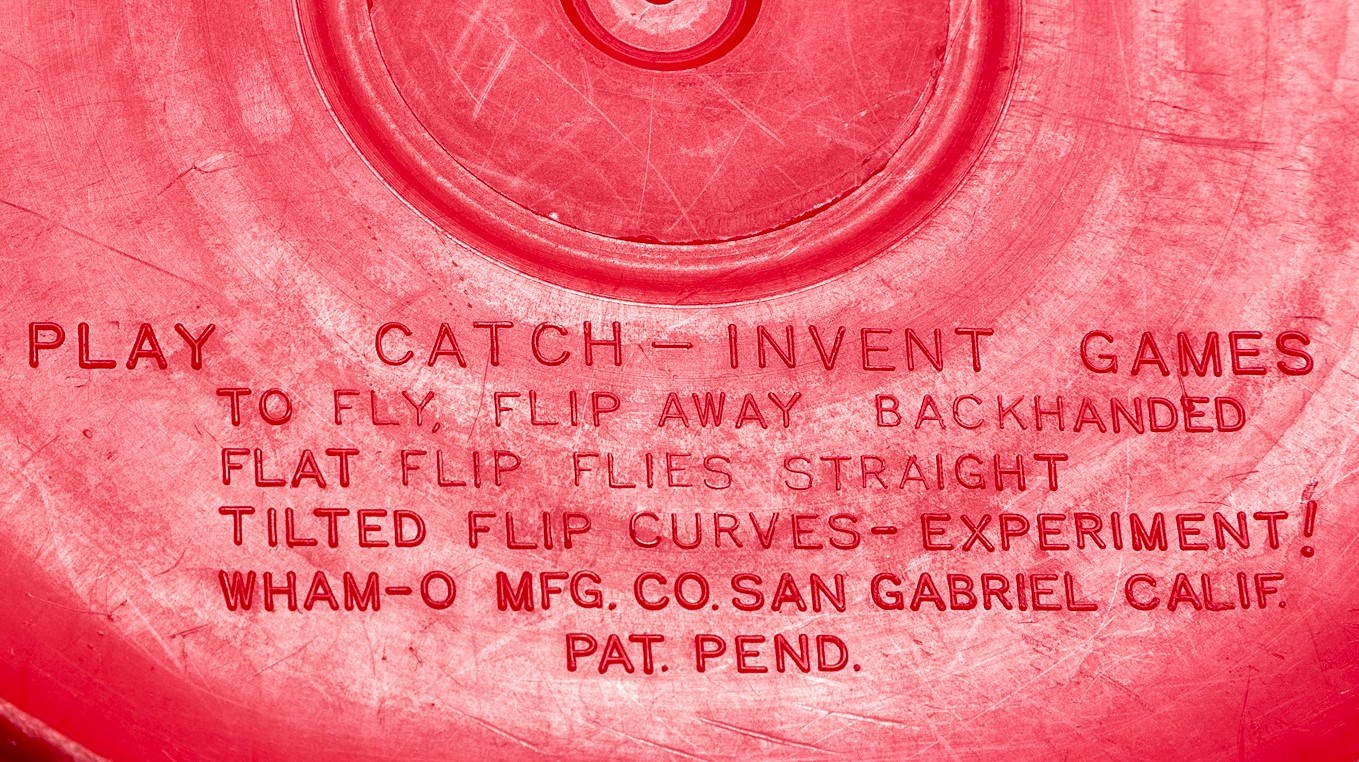
“Play catch, invent games. To fly, flip away backhanded; flat flip flies straight; tilted flip curves-experiment!” – Wham-O Frisbee.
Since the mid-1960s, the back of the Frisbee has featured an inscription of the original playing instructions. The playing instructions, dating back to the 1950s, were the first Frisbee play that grew into what we now know as “freestyle.”
“Freestyle is the Mother of all disc sports.”
Although it was not called freestyle until the 1970s, the throw-and-catch freestyle frisbee was the original form of flying disc play, simply referred to as “playing frisbee.” The origins of all modern disc sports stem from the history and evolution of early frisbee freestyle play. Guts, disc golf, and ultimate frisbee have all borrowed the playing formats from traditional ball sports, replacing the ball with a flying disc. These flying disc sports provide an enjoyable experience for players of all skill levels. On the other hand, freestyling requires unique skills, including throwing and catching challenges that players would set for themselves. Freestyle is regarded as the most challenging discipline of disc handling, and it does not need to be competitive to be rewarding.
“As a non-competitive athletic play in the 1960s, freestyle playing with a Frisbee was the perfect activity and athletic alternative for the counterculture.”
The early pioneers of throw, catch, and flow freestyle invented, developed, and introduced the throwing techniques used in all of today’s popular disc sports. At the beginning of modern disc sports, disc athletes who played all the disc sports and were skilled in freestyle had an advantage when playing ultimate and disc golf. During the early years, the top freestyle players excelled as disc golfers and ultimate frisbee handlers.
“All disc sports are rooted in early freestyle play. Any disc sport requiring disc handling skills will be greatly advantaged by having skill in freestyle,” – Ultiworld.
Freestyle, as the name suggests, is undefined. The style of play has evolved and changed since the 1960s. Today’s freestyle play depends on personal style.
Disc Sports First Athletes 1960s.
“During the 1960s, A handful of Frisbee players who initially played for leisure advanced their skills and began to present the Frisbee as something more than just a toy.”
Notable origins for early freestyle and the first skilled disc athletes were Queens Park in Toronto, Sproul Plaza at UC Berkeley, and Central Park in New York City.
Before modern disc sports and with no Frisbee mentors, Americans Ken Westerfield and Jim Kenner began developing a fast-flowing freestyle routine on local beaches in Michigan in the early 1960s. In the mid-1960s, their freestyle play further developed as a counterculture pastime. In 1970, they relocated to Toronto and started performing Frisbee shows across Canada for Molson Brewery and Irwin Toy. Ken and Jim also created early Open Frisbee Championship events.

On the West Coast, at UC Berkeley in California, Victor Malafronte and John Z. Weyand of the Berkeley Frisbee Group (BFG) elevated Frisbee tossing and catching to a delicate art form, characterized by flowing throws and receptions.
In the 1970s, Vaughn Frick, John Sappington, and Scott Dickson performed creative trick throws and catches on the University of Michigan campus.
As a young lad, Dan Roddick began playing frisbee with his father, Jack. He organized early Frisbee sports events at his Pennsylvania and New York State Frisbee Championships.
The IFA Newsletter brought all of these groups together in one way or another. It led Victor Malafronte to see the new freestyle event at the 1973 Canadian Open Frisbee Championships in Toronto and to meet Ken Westerfield and Jim Kenner. It was the first time Kenner and Westerfield saw someone else who could play with a Frisbee on their level. Due to a lack of competitors, the 1973 freestyle event was canceled. However, this period initiated meetings among Frisbee legends who would later be recognized in history as some of the early pioneers of modern disc sports.
In response to meeting Victor, Ken Westerfield trekked to the West Coast later that same year to meet and freestyle with the Berkeley BFG players. Exchanging volumes of information about frisbee styles, techniques, and activities on Sproul Plaza at UC Berkeley with Victor Malafronte, John Z Weyand, Monica Lou, and Roger Barrett.
Gerry Lynas and Kerry Kollmar were influential early freestylers in New York. They initiated play in Central Park and Washington Square, mentoring future freestyle champions.
Dan “Stork” Roddick met Spyder Wills at Laguna Beach for some Frisbee play and was highly influenced by the graceful and beautiful style that Spyder showed.
Before the first freestyle competition, the 1973-74 period would bring John Kirkland, Alan Blake, and John Mortimer to Toronto at different times to meet and freestyle with Jim Kenner and Ken Westerfield. The exchange of ideas about creative throwing and catching grew substantially during this period. History of Disc Sports in Canada
The First Frisbee Freestyle Competition, Toronto 1974.
“I’ve never viewed frisbee freestyle as an athletic sport with shorts and tube socks or a beach recreation. Freestyle, to me, has always been a cool urban street thing, like skateboarding.”
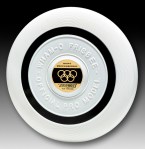
The current freestyle style emphasizes nail delay but overlooks historical freestyle throwing techniques. Early freestyle specialists were responsible for inventing and refining the throwing techniques that are now commonly used in today’s popular disc sports. Before 1975, freestyle consisted of a fast-paced routine featuring many flying disc-throwing and catching techniques. These routines included spectacular one-handed catches off the throw, typically performed on hard surfaces to facilitate disc skipping and speed. Freestyle-play for the first freestylers was smooth and often compared to martial arts and dance. The preferred disc for the earliest freestylers was a small but stable disc known as the Wham-O Professional Model Frisbee.
Ken Westerfield and Jim Kenner were pioneers in disc sports. They are credited with developing playing techniques that have become standard moves in today’s freestyle. While in high school during the 1960s, they would ride motorcycles with their friends to local Michigan beaches and spend entire days playing frisbee.
In 1970, after relocating to Toronto, Ken and Jim established a small but enthusiastic community of frisbee players at Queen’s Park. They played frisbee golf and freestyle in the park daily.
In 1973, Ken Westerfield and Jim Kenner, determined to see if anyone outside of Toronto could freestyle, decided to add a freestyle competition to their Canadian Open Frisbee Championships in Toronto. A freestyle competition format where teams perform a routine judged on creative throwing and catching techniques set to music. A lack of players forced them to cancel the event.

In the fall of 1974, Ken Westerfield and Jim Kenner would make a second attempt with their freestyle competition event in Toronto. Unlike the low turnout in 1973, newly energized freestylers from the U.S. assembled in Toronto to compete in this new freestyle event. In 1974, Westerfield and Kenner introduced a new event called freestyle at the 3rd Annual Canadian Open Frisbee Championships. The event was a success.
The Decade Awards 1970-75 Top Freestyle Routine: Ken Westerfield/Jim Kenner Canadian Open 1974:
“Considered the greatest speed flow game of all time. Ken and Jim put on a clinic to cap off a blistering hot final by all the teams. They featured a rhythmic and dynamic style with concise catch-and-throw combinations. These two gentlemen are credited with creating formal disc freestyle competition.”
Among the competing freestyle pairings were such Frisbee notables as Jim Kenner/Ken Westerfield, Doug Corea/Jim Palmeri, John Kirkland/Jose Montalvo, Irv Kalb/Dave “Buddha” Meyers, Dan “Stork” Roddick /Bruce Koger, and Tom Cleworth/John Connelly.
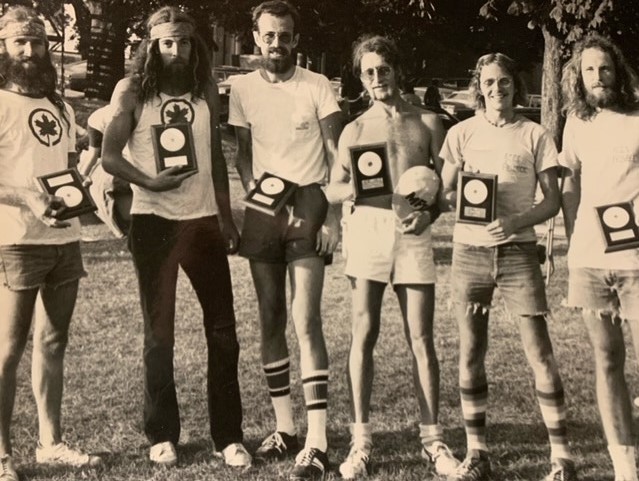
The Canadian Open Frisbee Championship in Toronto presented the first freestyle competition. Westerfield and Kenner, having won as the world’s first Freestyle Champions, hosted and acted only as freestyle judges for a second freestyle competition at their Vancouver Open Frisbee Championships, on Kitsilano Beach in Vancouver, BC. Canadian freestylers Bill King, Jim Brown, and John Anthony made their competitive debut.
The efforts of Westerfield and Kenner marked a pivotal moment, shaping and structuring the discipline into the competitive format we recognize today. A new regulated sport was born for skilled players to demonstrate their flair for intricate throws, catches, and choreographed routines. The freestyle community has expanded, disciplines have evolved, but after 50 years, the competitive format has remained largely unchanged.
“The competitive freestyle art form, which began its gestation in Toronto, Berkeley, and Michigan, was born at the Canadian Open on Sunday, August 18, 1974, at approximately 3:00 PM Eastern Daylight Saving Time” – FPA History of Freestyle.
Jim Kenner and Ken Westerfield were inducted into the Inaugural Pioneer Class FPA Freestyle Disc Hall of Fame:
Frisbee Freestyle Competitions are added to US National Events.
In 1975, the American Flying Disc Open (AFDO) in Rochester, New York, the Octad in New Brunswick, New Jersey, and the 1975 World Frisbee Championships held at the Rose Bowl in Pasadena, California, adopted Westerfield and Kenner’s freestyle competition format as one of their new events.
“The introduction of the nail delay in 1975 was a major shift in freestyle play. It changed from a flying-disc event to a spinning-disc event, altering the objectives entirely.”
The throw, catch, and flow freestyle competitions ended with the first competition in 1974. Following the invention of the nail delay in 1975 and the IFA tournament rules allowing the use of paraphernalia for rim control, freestyle rapidly evolved in a new direction.
“Not everyone supported the changes in freestyle play. The use of paraphernalia gave freestylers greater control over the disc, enabling players to effectively choreograph their routines. Critics of this evolution argued that while freestyle can be played recreationally in any style, gaining respect as a legitimate sport requires a higher level of risk-taking.”
The Wham-O NAS Tournaments in the 1970s expanded and continued to fuel the growth of freestyle. The WFC Freestyle championship became the de facto world championship of freestyle; no other competition could match its prestige. Joey Hudoklin and Richie Smit’s adroit use of the “lid,” as the Wham-O 80 mold disc was affectionately called, began the transition that eventually led to the 80-mold becoming the new standard for freestyle. In the competition, players could use playing aids such as silicone spray and plastic nails with the 80-mold. These aids, along with the larger flight plate and weight of the 80-mold, made it possible to perform longer delay moves, including controlling the disc movement through rim delay passes. As a result, the focus of play shifted away from the fast-paced, flying disc catch and throw.
Discraft Sky-Styler – Official Freestyle Disc.
Discraft, founded in the late 1970s by Jim Kenner and Gail McColl in London, Ontario, moved from Canada to its present location in Wixom, Michigan. Discraft introduced the Sky-Styler 160-gram freestyle disc. This disc was adopted as the standard for freestyle and replaced the Wham-O 80 mold 165 gram as the preferred disc for freestyle play from the 1980s to the present.
In 1991, the Ultra-Star, used for ultimate, was specified as the official disc for UPA tournament play. Jim and Gail were inducted into the FPA Freestyle Disc Hall of Fame and the World Disc Golf Hall of Fame. Discraft’s Ultra-Star was inducted into the USA Ultimate Hall of Fame for Special Merit.
Touring Frisbee Freestyle Shows in the 1970s.
Freestyle was new and exciting, as the original form of Frisbee-play. A few of the top players of the 1970s developed Frisbee shows. Beginning in 1971, the first Frisbee shows began with Americans Ken Westerfeld and Jim Kenner touring Canada for Wham-O licensee Irwin Toy and Molson Brewery.
Mike and Bill Schneider, Northern California players, toured Europe for Wham-O licensees. In 1974, John Kirkland and Victor Malafronte began performing pre-game Frisbee shows for the Harlem Globetrotters.
Famous touring Frisbee shows that followed were Frisbee South, Good Times Professional Frisbee Show, Spinning Bees, The Air Aces, Flying Aces, and The Jammers. These Frisbee performers would perform at fairs, universities, shopping malls, and professional sporting events. This marked the beginning of exploring the possibilities of playing with a flying disc. Wham-O and Irwin Toy organized several national and international tours.
Additionally, sponsored frisbee events for major American and Canadian companies, including Coca-Cola, Orange Crush, Coppertone, Molson, Labatt, Air Canada, Budweiser, Lee Jeans, and the Harlem Globetrotters. These promotions and shows would reach millions of people in every city across North America and eventually the World. The early frisbee freestyle shows deserve credit for their performances and publicity, which brought awareness to this new age of flying disc sports.
Freestyle Philosophy and Competition in the 1970s-80s.

Freestyle is one of the few sports that can be rewarding without the need for competition. Accomplishing goals and the satisfaction of personal progress can be its reward. Freestyle began as a jamming event where players showcased their moves and styles to others. Freestyle, the earliest playing challenge with a flying disc and alternative disc athletes, helped to create and promote the early spirit-of-play philosophy that carried over to all disc sports. – Spirit of the Game.
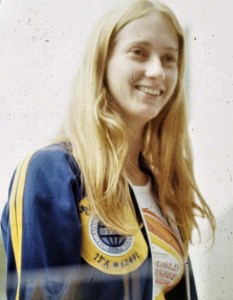
Dave Marini started the Freestyle Players Association in 1978, and freestyle became a regulated sport. The sport of Freestyle attracted a new generation of players such as Rob Fried, Doug Simon, Roger Meier, Peter Laubert, Krae Van Sickle, Jeff Felberbaum, John Dwork, Brad Keller, and Donnie Rhodes from New York City; and John Jewell, Brian, and Matt Roberts from Los Angeles. Also new to the scene was Kevin “Skippy Jammer” Givens, who would become highly influential in mentoring numerous future champions. The sport also saw the emergence of the “Coloradicals,” featuring Bill Wright, Doug Brannigan, and Rick Castiglia. On the women’s side, New York’s Sue Strait and Jane Englehart set the standard and were closely rivaled by G Rose and Laura Engle.
Seattle’s Mary Lowry also began playing around this time and would become one of the most influential women’s players ever.
Seattle’s Randy Silvey got his start during this era. Discraft’s introduction of the Sky-Styler disc in 1980 presented an option for Freestylers, and it became popular as the standard for freestyle, eventually replacing the 80 molds as the de facto disc of choice. The Sky-Styler weighed 160 grams, slightly less than the 80 molds. While it had a smaller flight plate and delay surface area, it had a deeper rim, allowing for superior brushing, rolling, rim work, and wind play. It was also easier to catch than the Wham-O 80 mold. Tom Schot’s World Disc Games in Santa Cruz started during this period and further fueled the growth of freestyle.
Freestyle-Play and the Beginning of Disc Golf and Ultimate.
“Because the current style of playing freestyle focuses on nail delay moves, freestyle doesn’t get the rich throwing history it deserves.”
Guts, disc golf, and ultimate all have playing strategies and rules similar to traditional ball sports. Early freestyle play and all disc sports share a common history. The Frisbee has instructions to “PLAY CATCH” and “EXPERIMENT” on its underside. The first play with Frisbees involved experimenting with different throwing and catching methods.
“Freestyle has veered away from what makes it beautiful, which is the mere flight of the Frisbee and the kinesthetic awareness it creates” – Donnie Lee Rhodes.
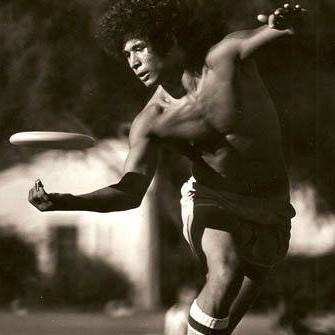
 Because freestyle was a complex throwing, flying disc event during the 1960s and early 1970s, freestylers were well-suited to excel in all the other frisbee-throwing disc sports. Freestyle-play preceded frisbee football, ultimate, and disc golf. In the 1970s, most disc golf and ultimate’s earliest champions were also excellent freestylers.
During the 1970s, freestyle-play and competitions were the main attraction at all the tournaments. When players needed a break from freestyle, they would often engage in other disc sports, such as disc golf and ultimate. Despite the exceptional athleticism of early ultimate players, it was challenging to have an entire team who were skilled in advanced throws. This is where freestylers came in, with their exceptional throwing and catching skills, making up the majority of early top handlers in ultimate and competitors in disc golf. The freestyle throwing skill requirements for today’s disc sports could be categorized as “freestyle throwing sports,” including disc golf and ultimate.
Freestylers were the Top Disc Athletes in Early Disc Sports.
“Freestyle produced disc sports’ early skilled disc athletes.”
From the early 1970s, Frisbee multi-event tournaments centered around popular freestyle events. History acknowledges that freestyle disc athletes who played other disc sports presented exceptional disc skills in these new disc sports.

These notable freestyle disc athletes were also the first competitive superstars in all the early disc sports. – Doug Corea, Dave Marini, Jens and Erwin Velasquez, Jeff Jorgenson, Tom Kennedy, John Weyand, Victor Malafronte, Tom Shepard, Steve Gottlieb, Johnny Jewell, John Mortimer, Gary Perlberg, Jeff Soto, Tom McRann, Danny McGinnis, Dan Roddick, Irv Kalb, Don Vaughn, Don “Rocket” Hoskins, Michael “Muck” Young, John Bird, Cyndi Birch, Michelle Pezzoli, Monika Lou, Bill King, Jim Brown, John Anthony, Tom Wingo, Moises Barbara Alfaro, Krae Van Sickle, Mark Danna, Kerry Kollmar, Peter Bloeme, Freddie Haft, John Kirkland, Ken Westerfield, Mary Kathron, Gail McColl, Jim Kenner, John Connelly, Tom Cleworth, Bruce Koger, Jose Montalvo, Chau Rottman, Alan Blake, Marie Murphy, John Sappington, Scott Dickson, Vaughn Frick, Jo Cahow, “Igor” Harper, Don Cain, Ronnie Dorn, Jamie Moldt, Bill O’Dell, Gerry Lynas, and Tom Monroe.
The Future of Freestyle, According to A.I.
Freestyle participation has wavered over the years. One significant reason for this decline is the evolution of the activity. What once involved a simple throw and catch of a flying disc has become more complicated with the introduction of various paraphernalia and competitive judging standards. Unlike Ultimate or Disc Golf, which have more straightforward objectives, freestyle requires mastering complex technical skills, like the “nail delay” (spinning the disc on a fingernail). The difficulty of this particular technique as an introduction can deter casual newcomers. While any disc can be used, modern freestyle primarily requires specific 160-gram discs, along with aids like silicone spray and fake nails to help perform long-duration tricks. This requirement can also deter casual hobbyists. Even though participation and competition have decreased, a simple throw-and-catch freestyle will always be an excellent trainer of handling skills for all other disc sports. A training tool and good exercise may be what revives future participation.
The information on freestyle’s future was referenced with the assistance of artificial intelligence.
Timeline for the Introduction of Modern Disc Sports.
1964–Wham-O produces the “Official Pro Model Frisbee” to promote the Frisbee as a flying disc for sport.
1971–Americans Ken Westerfield and Jim Kenner gained fame performing Frisbee street shows in cities and towns across Canada. They were hired full-time by Wham-O licensee Irwin Toy, along with co-sponsors, to perform at sporting and special events promoting Frisbee and disc sports across the U.S. and Canada.
1972–Bill and Mike Schneider are hired by a German company to perform Frisbee demonstrations in Europe.
1972–The Canadian Open Frisbee Championships, Toronto, presented early modern disc sports.
1972–The IFA Newsletter began in 1968 and, in the early 1970s, brought together early pioneers of modern disc sports in the U.S. and Canada
1974–Freestyle Competitions begin. Canadian Open Frisbee Championships, Toronto, and Vancouver, BC.
1974–Dan Roddick and Flash Kingsley’s Flying Disc World newsletter becomes the first independently published magazine for flying disc sports.
1974–First multi-event disc sports tournaments and competition tour for the first disc athletes. The Canadian Open Frisbee Championships, Toronto, ON; the Vancouver Open Frisbee Championships, Vancouver, BC; the Octad, New Brunswick, NJ; the American Flying Disc Open, AFDO, Rochester, NY; and the Wham-O World Frisbee Championships (WFC), Rose Bowl, Pasadena, CA.
1974–Jim Kenner and Ken Westerfield began performing halftime frisbee shows at university basketball games for several years as the Molson Frisbee Team.
1974–John Kirkland and Victor Malafronte perform Frisbee shows for the Harlem Globetrotters tour.
1974–The Rochester Frisbee Club.
1975–Wham-O introduces the World Class 119g disc. An improvement in discs for competitive sports.
1975–World Class Frisbee signature disc for the U.S. and Canada.
1976–Wham–O introduced the North American Series (NAS) tour events in the US and Canada, qualifying players for the Rose Bowl World Frisbee Championships.
1976–Frisbee World Magazine is published by Wham-O with Dan Roddick as editor.
1978–Discraft manufactures the Sport Disc in London, Ontario, Canada.
1978–Disc sports Spirit of the Game is recognized in ultimate and added to the official rules.
1978–The Freestyle Players Association was established.
1978–Santa Cruz Flying Disc Championships.
1987–The World Flying Disc Federation’s (WFDF) first overall competition.
2016–Freestyle Players Hall of Fame–Freestyle Players Association.
The history of many disc athletes can be read at the Disc Golf Hall of Fame, | Ultimate Hall of Fame | FPA Freestyle Disc Hall of Fame.
Note: Some of the information in this article was referenced from the Freestyle Players Association.
- History and awards: Decade Awards
- A complete history of the beginning of disc sports and freestyle: Freestyle Players Association
- Articles on freestyle cross-training: Ultiworld | Ultimate Rob | FrisbeeGuru
- Players Organizations: Freestyle Players Association | Frisbee Guru | World Flying Disc Federation
- Some early freestyle throwing techniques and some new throws are demonstrated by AUDL ultimate great, Rowan McDonnell: Rowan McDonnell’s 80 Ways to Throw a Frisbee.
Next Articles:
Guts Frisbee History
History of Ultimate Frisbee
Disc Golf History
Home page: The History of Frisbee and Disc Sports
Note: This information was referenced and time-lined from disc sport historical and biographical articles, including U.S. and Canadian Disc Sports Hall of Fame inductions, Disc Sports Player Federations, and other historical resources. This article was researched, written, and compiled by frisbee and disc sports historians. The history in this document may change as events and people are added.
Reproduction or linking to this text, in whole or in part, with proper credit is allowed.discsportshistory.com
© 2026 Disc Sports History. All rights reserved.
 The History of Frisbee and Disc Sports