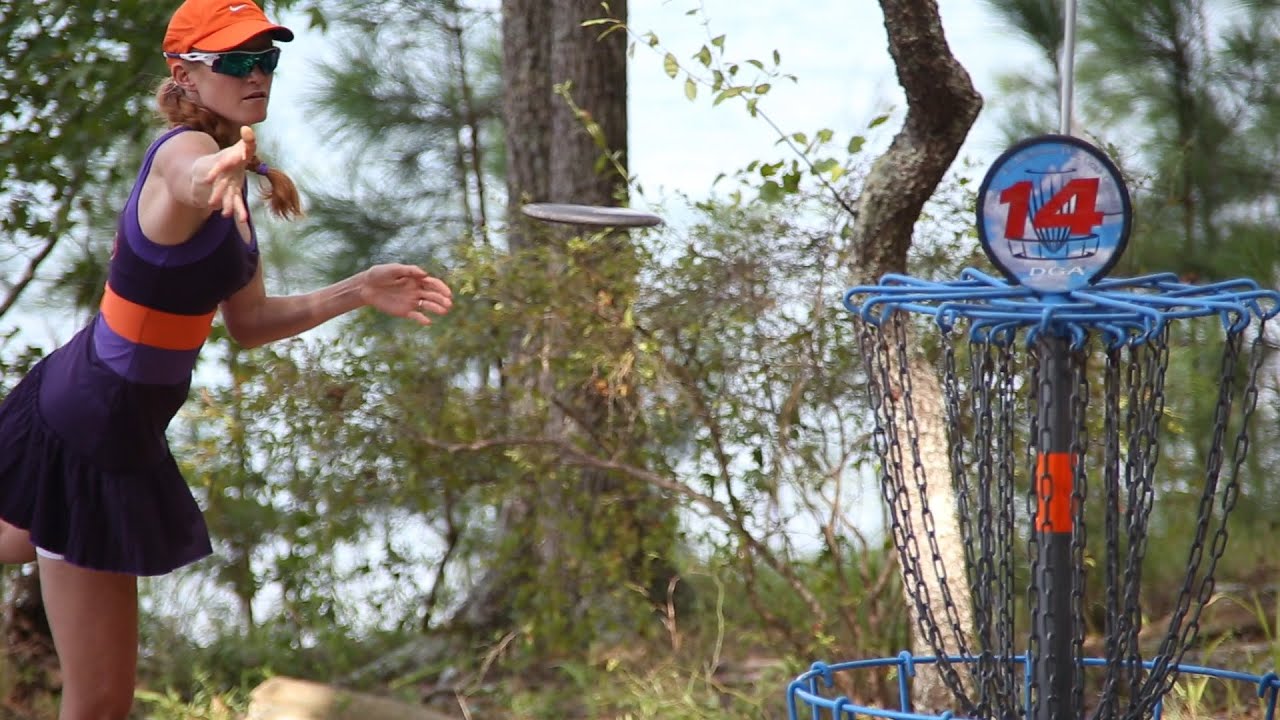
“Great players get into the finals, but a little luck has almost always made the winner.”
Disc Golf Began in Canada in 1926.
Disc golf’s origins can be traced back to 1926 in Bladworth, Saskatchewan, Canada. A group of school friends, led by Ronald Gibson, played a game at their school called “Tin Lid Golf.” In this game, they would throw tin lids into circles they had drawn on sandy patches.
Although they played regularly, the game ended when they went their separate ways. We don’t have any tangible evidence that Tin Lid Golf has any historical connection to modern disc golf, but who knows? It’s possible that someone from the group may have moved to the East Coast of the U.S. for whatever reason and introduced the idea of throwing pie tins at Ivy League universities.- 1950s Pie Tin Tossing at Yale.
Modern Disc Golf Early Courses, 1970.
As of 2023, there are more than 14,000 disc golf courses worldwide. In 1970, you could count the number of designed courses, using the Frisbee to play golf, on one hand. Toronto, ON, Rochester, NY, Berkeley, CA.

These were the first designed disc golf courses with object holes, and the designers were early pioneering promoters of all disc sports. This was the beginning of modern disc golf in Canada and the United States. All three courses and the course designers were unaware of each other’s existence. In 1970, newly arrived residents of Toronto, Ken Westerfield and Jim Kenner, played frisbee golf daily on an 18-hole course they designed in Queen’s Park. This was years before the concept of official disc golf courses emerged, and both had previously enjoyed playing random-object hole disc golf during their early Frisbee years in Michigan. Gail McColl and other local Frisbee players were introduced to freestyle and disc golf at the park and joined this group.
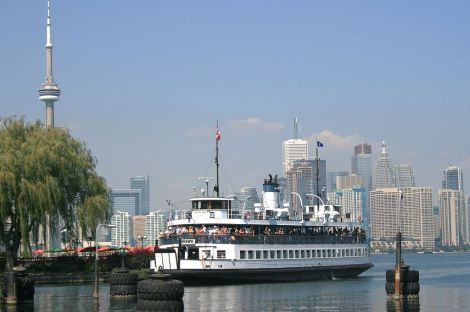
Through the 1970s, Westerfield and Kenner ran object-hole disc golf tournaments for the Canadian Open Frisbee Championships on the Toronto Islands and in Vancouver’s Stanley Park. These were the first disc golf competitions in Canada.
Mike Sullivan, his Toronto Island resident friends, and others played disc golf on the Toronto Islands using natural objects. In 1980, a pole hole course was designed and installed on the Toronto Islands. It was the first official disc golf 18-Pole Hole course in Canada. In the 1980s, Westerfield ran many disc golf tournaments on the Toronto Island pole hole course. The Canadian Open Frisbee Championships, the Disc Golf Challenge PDGA (1984-1987), and the Toronto Island Open PDGA (1984-2012), Ken started this disc golf tournament in 1984, and it ran with several different directors until 2012.
1987 PDGA World Disc Golf Championships in Canada.
Ken Westerfield was dominant in virtually every category of flying disc sports competition. A top competitor in the IFA, NAS National Overall, and Disc Golf Tour. Westerfield participated in five Wham-O World Frisbee Golf Championships.
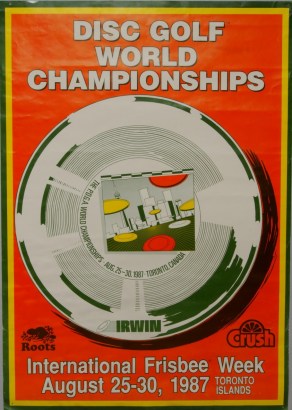
After the 1979 WFC Frisbee Golf Championship, Ken retired from disc golf competitions but continued to promote disc sports in Canada, particularly starting and building an ultimate league in Toronto. The Official PDGA disc golf national tour debuted in 1982, but Ken, having retired, never competed or became a member of the PDGA. However, in 1987, the PDGA and the Canadian Disc Golf Association approached Ken to produce and tournament direct (TD) the PDGA World Disc Golf Championships in Toronto. With the support of sponsors Orange Crush, Roots, and Irwin Group, Ken Westerfield and Bob Blakely, director of the Canadian Disc Golf Association, successfully organized the 1987 PDGA World Disc Golf Championships held on the Toronto Islands. This was the first and only time the championship has been held outside the US. In recognition of his contribution, Ken was made an honorary PDGA Member #3248 in 1987, the same year he retired from his 25-year career in Frisbee and disc sports.
Discraft, London, Ontario.
Discraft was founded in 1978 by Jim Kenner and Gail McColl in London, Ontario. They produced their Sport Disc and ran several disc sports tournaments before relocating the company from Canada to its present location in Wixom, Michigan.
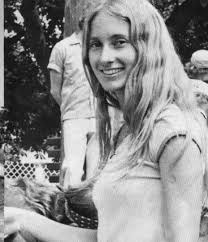
Discraft produces flying discs for all disc sports, including the Sky-Styler for freestyle and the Ultra-Star for ultimate. These discs are adopted as the standard for freestyle and ultimate. In 1991, the Ultra-Star was specified as the official disc for UPA and USA Ultimate tournament play. Jim and Gail were inducted into the World Disc Golf and Freestyle Disc Hall of Fame. In 2011, the Discraft Ultra-Star and Jim Kenner were inducted into the USA Ultimate Hall of Fame for Special Merit.
World Disc Golf Hall of Fame.
The World Disc Golf Hall of Fame is an independent organization dedicated to promoting disc golf, its pioneering players, and the sport’s history. It was founded in 1993 by Lavonne Wolfe of Huntsville, AL. Lavonne also created what is now known as the Headrick Memorial Museum, a collection of memorabilia that helps describe the history of our sport, now housed at the International Disc Golf Center in Appling, GA.
Jim Kenner, Gail McColl, Ken Westerfield, and Michael Sullivan have all been inducted into the World Disc Golf Hall of Fame.
WDGHF induction for Jim Kenner:
“A modest pioneer in a sometimes flamboyant industry, Jim Kenner has proven himself to be a brilliant innovator in the pursuit of flying disc excellence. Experimenting with both new shapes and materials, Kenner’s development of a unique line of flying discs has been punctuated with the introduction of disc designs so radical and inventive that they mark a turning point in the nature of the game. Though he could easily rest on his laurels as a pivotal developer of disc technology, Jim Kenner continues to contribute to the growth of disc golf as a consistent supporter and sponsor of events and players.”
WDGHF induction for Gail McColl:
“As co-founder and co-owner of Discraft Inc., Gail McColl has been involved from the very birth of the sport and blazed a trail for women in disc sports. With multiple world disc titles to her credit – including the 1978 Women’s World Disc Golf Champion – Gail is recognized as an original pioneer in helping to break the flying disc out of its culturally established role as a toy and into the high-performance sports equipment of today”.
WDGHF induction for Ken Westerfield:
“Ken Westerfield is an icon of disc golf and one of the strongest overall competitors in flying disc sports of all time. His powerful and accurate sidearm throw is widely acknowledged as one of the best the sport has ever seen. He was one of the top players at the emergence of organized disc golf competitions. He pioneered the growth of disc golf across Canada. Many Canadian players trace their introduction to disc golf to being mentored by Ken. His contributions are a huge part of the foundation of our sport.”
WDGHF induction for Michael Sullivan:
“Michael Sullivan grew up on Toronto Island, where he discovered flying disc sports in 1978. By age sixteen, he was the overall Canadian Open Champion. Driven to win, ‘Sully’ was renowned for using superb driving form and power to master a disc golf course. His record includes several top-five finishes, World Doubles titles, and the World Games Silver Medal. As an athlete and a successful businessman, he exemplifies professionalism. Michael’s love of the game is reflected in his generous contributions towards disc sports in Ontario. He will always be a great player and friend of disc golf.”
Disc Golf Events and Timeline in Canada.
1926–Disc golf was invented in Bladworth, Saskatchewan, Canada.
1970–Queen’s Park, Toronto. Ken Westerfield and Jim Kenner designed an object-hole disc golf course.
1972–Canadian Open Frisbee Championships, Toronto, and 1974 Vancouver Open Frisbee Championships introduced modern disc sports, including guts (1972), freestyle (1974), ultimate (1975), DDC, and disc golf (1976), Disc golf is played first with object targets, then using disc golf pole holes.
1978–Discraft Company begins in London, Ontario. Today’s largest disc manufacturer for all disc sports.
1980–The first official 18-hole pole hole course is designed and installed on Toronto Ward’s Island, Toronto, ON. The next course was a 9-hole on Pender Island, BC. In 1976, Winskill Park, Tsawwassen, BC, installed a 9-hole disc golf course with disc golf holes made by locals. In the 1990s, they were replaced with official Mach II pole holes.
1984–Ken Westerfield produced and tournament-directed PDGA disc golf tournaments on the Toronto Island course, including the Disc Golf Challenge (1984-1987) and the Toronto Island Disc Golf Open (1984-1987).
1987–World Disc Golf Championships (PDGA), Toronto Islands. This is the only time this annual championship has been played outside of the U.S.
(For a complete timeline of disc sports in Canada)
World Disc Golf Hall of Fame.
Inductees:
1993 Vanessa Chambers | Dave Dunipace | Ed Headrick | Tom Monroe | Jim Palmeri | Dan Roddick | Ted Smethers
1994 Harold Duvall | Nobuya Kobayashi | Darrell Lynn | Dan Mangone | Doug Newland | Snapper Pierson | Lavone Wolfe
1995 Ken Climo | John David | David Greenwell | Johnny Roberts | Dr. Rick Voakes
1996 Mike Conger | Patti Kunkle | Rick Rothstein
1997 Steve Slasor | Elaine King | Jim Kenner
1998 Gregg Hosfeld | John Houck | Carlton Howard
1999 Sam Ferrans | Steve Wisecup | Tim Selinske
2000 Tom Schot | Royce Racinowski
2001 Stan McDaniel | Johnny Sias
2002 Alan Beaver | Gary Lewis
2003 Mark Horn | Brian Hoeniger | Dr. Stancil Johnson,
2004 Derek Robins | Geoff Lissaman | Johnny Lissaman | Marty Hapner
2005 Mats Bengtsson | Sylvia Voakes
2006 Chuck Kennedy | Kozo Shimbo
2007 Fred Salaz | Michael Travers
2008 Dan Ginnelly | Juliana Korver
2009 Crazy John Brooks | Lynne Warren | Michael Sullivan
2010 Charlie Callahan | Tomas Ekstrom | Brian Cummings
2011 Don Hoffman | Joe Feidt | Brent Hambrick
2012 Tim Willis | Jeff Homburg | Bob Gentil (New Zealand)
2013 Barry Schultz | Becky Zallek | Jim Challas | Ken Westerfield
2014 Don Wilchek | Jim Oates | Italian Victor Parra
2015 Gail McColl | Anni Kreml | J Gary Dropcho
2016 Joseph Mela | Ace Mason | Tita Ugalde
2017 John Bird | Des Reading | Brian Graham
2018 George Sappenfield | Andi Lehmann Young | Jay “Yeti” Reading
2019 Eric Marx | Mitch McClellan
2020 Bob Harris | Al “Speedy” Guerrero | Cliff Towne | Jesper Lundmark | Valarie Jenkins-Doss
2021 Martin Frederiksen | Jonas Löf | Dave McCormack | Dean Tannock | Glen Whitlock
2022 Jo Cahow | Steve Lambert | Peter Shive | Jim Orum | Pete May
2023 Charlie Mead | Steve Ganz | Kent Johnson | Dr. John G. Duesler Jr | Bill Burns
2024 Terry Calhoun | Mike ‘Hubee’ Hughes | Leonard Muise | Chris O’Cleary | Scott Stokely
Next Articles:
History of Frisbee and Disc Sports in Canada
Ultimate Frisbee History in Canada
Freestyle Frisbee History
Note: This information was referenced and time-lined from disc sport historical and biographical articles, including U.S. and Canadian Disc Sports Hall of Fame inductions, Disc Sports Player Federations, and other historical resources. This article has been researched, written, and compiled by historians specializing in frisbee and disc sports. The history in this document may change as events and people are added.
Reproducing any part of this article, whether in whole or in part, is permitted when proper credit and a link are provided.
Top featured photo: Holly Finley – model/pro disc golfer for Team Innova.
© 2026. Disc Sports History. All rights reserved.
 The History of Frisbee and Disc Sports