“I do not exist to impress the world. I exist to live my life in a way that will make me happy.”
Historians are often left guessing when they attempt to reconstruct the past. The true significance of historical events may only be realized in hindsight. If these events are not recorded through the eyes of those who witnessed or were part of them, the subtleties of these moments may be lost. This site offers verified information that helps to clarify what is currently known about the origins of early frisbee play and the first flying disc sports. The site also includes a timeline of events that led to the introduction of all disc sports, which originated in Canada and the United States.
When disc sports were first introduced in Canada and the United States, there was no gap in their development. Both countries developed concepts and formats for disc sports simultaneously, sharing a common timeline in the history of the world’s first disc sports.
Tin-Lids, Frisbee, and Flying Disc.
“People view it as a novelty often, but if you take away the Frisbee and replace it with a ball, it’s really difficult.” – Brandon Leshchinskiy.
During the 1950s and 1960s, the Frisbee – originally created from a tin pie pan and later named after a bakery – became a popular plastic flying toy across North American cities and towns, providing a new source of entertainment. In these early years of frisbee play, many advancements were made in disc sports in both the United States and Canada. A handful of pioneers who worked on improving their playing abilities went on to create organized events and competitive formats for flying disc competitions, marking the start of modern disc sports as we know them today.
Canada’s Pre-Modern Disc Sports History.
“Disc sports are Canadian sports. No other country can claim an earlier history.”
According to every source, including The Complete Book of Frisbee, the world’s first flying disc sport was disc golf, played in Bladworth, Saskatchewan, Canada (1926). It was the first organized game, uniformly played with a flying disc-like object, and is the earliest recorded history of pre-modern flying disc sports.
In 1926, Ronald Gibson and a group of his Bladworth Elementary School buddies played a game of throwing tin lids into 4-foot-wide circles drawn into sandy patches on their school grounds. They called the game Tin Lid Golf and played it regularly. However, as they grew older and moved apart, the game ended. It’s uncertain whether there’s a direct connection between Tin Lid Golf in 1926 and the origin of modern disc sports. However, it’s possible that someone from Bladworth Tin Lid Golf may have relocated to the East Coast of the United States and started pie tin tossing at universities like Yale. To date, we have no evidence to support that theory. The Frisbee and modern disc sports competitions emerged in Canada and the United States during the early 1970s, as both countries explored and established various innovations in competition and tournament formats. As Canada was one of the earliest adopters and most passionate supporters of disc sports, Canadian disc athletes and teams have consistently been recognized as some of the best in the world in various individual and team disc sports throughout the sport’s history.
Modern Disc Sports, 1970.
“As a non-competitive athletic play in the 1960s, playing Frisbee was the perfect activity and athletic alternative play for the counterculture.”
When discussing frisbee and disc sports, terms like “hippie” and “counterculture” often arise. However, few have clarified the origins and evolution of these sports. It wasn’t merely the hippies and counterculture that led to the creation of alternative sports; rather, it was open-minded athletes who developed new sports using a flying disc.
Since the 1970s, influential individuals from Canada and the United States have contributed to the advancement of Frisbee and disc sports. Saskatchewan was where Tin Lid Golf, a flying disc-like sport predating modern disc sports, was discovered.
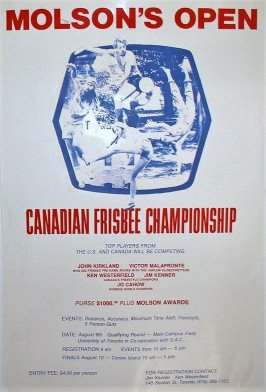
A significant era in the history of contemporary disc sports took place in Canada. Ken Westerfield and Jim Kenner began introducing Frisbee play and modern disc sports in the 1960s. In 1971, they organized Irwin Toy-sponsored Frisbee show tours across Canada and held disc sports competitions. These efforts led to the Canadian Open Frisbee Championships in 1972 in Toronto, the Vancouver Open Frisbee Championships in 1974 in Vancouver, BC, and the National Jr Frisbee Program at the beginning of disc sports.
Jim Kenner (Discraft founder and CEO) and Ken Westerfield, who had been friends since childhood, began their journey at age 13. Growing up in Detroit, Michigan, in the 1960s, years before modern disc sports and without frisbee mentors, they created a swift throwing and trick-catching routine called freestyle. In 1970, Jim and Ken moved from Michigan to Canada.

After relocating to Toronto, they made Queen’s Park downtown their regular spot for daily disc golf and freestyle. By night, for several years, they performed nightly frisbee street shows to large crowds on the Yonge Street Mall. In 1971, during a period of cultural movement, Jim and Ken embarked on a summer hitchhiking trip across Canada, impressing audiences with their improvised Frisbee street shows in cities and towns along the way. Despite facing challenges like limited funds and sometimes sleeping outside with sleeping bags, they managed to gain some fame and recognition. In 1972, Ken Westerfield and Jim Kenner suggested an idea to Irwin Toy, the Canadian manufacturer of Frisbees, which resulted in their hiring to tour as professional Frisbee performers. They began performing Frisbee shows at annual events like the Calgary Stampede and Klondike Days. They also organized competitive Frisbee events at recreation centers and schools across Canada.
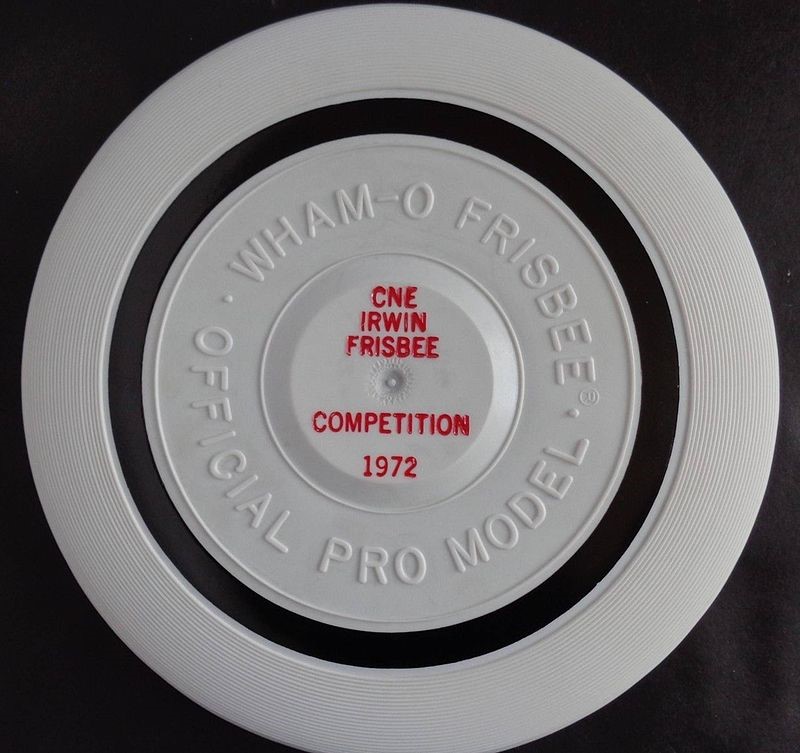
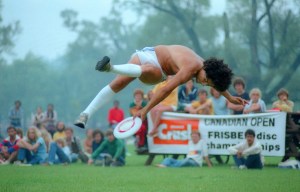
Joining forces with Humber College professor Andrew Davidson and Canadian National Exhibition (CNE) event coordinator Jeff Otis, Westerfield and Kenner organized the Canadian Open Frisbee Championships at the CNE, starting with Guts and Distance in 1972 and adding Freestyle and Accuracy events in 1974. In 1975, Ken and Jim moved the Canadian Open Frisbee Championships from the Canadian National Exhibition to the Toronto Islands. They also included disc golf, ultimate, and individual field events.
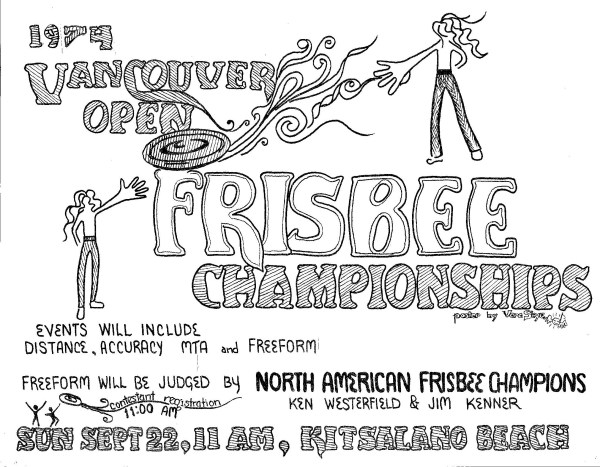
Westerfield and Kenner toured Canada as Frisbee Professionals for several years. Every summer, they would conclude their tour in Vancouver, BC, where they would spend their time freestyling on Vancouver’s beaches, including English Bay and Kitsilano. They also performed nightly Frisbee shows on the streets of historic Gastown. In 1974, they added another tournament to their Canadian Frisbee promotions, the Vancouver Open Frisbee Championships, which took place on Kitsilano Beach. In 1977, they organized an international multiple-event NAS competition in Stanley Park, where all the world’s best Frisbee players participated. Ken and Jim ran frisbee activities all across Canada, including major tournaments in Toronto and Vancouver. These were among the earliest competitions on the U.S. and Canadian tournament trail for Frisbee’s first touring competitive disc sports athletes.
A timeline of historical events for Ken Westerfield and Jim Kenner.
Modern Disc Sports Annual Tournaments in Canada and the U.S.
“The most thrilling aspect of any disc sport is the satisfaction of watching the Frisbee fly exactly as you intended.”
Guts, freestyle, disc golf, ultimate, double disc court (DDC), and several individual events, such as accuracy, distance, MTA, TRC, and Discathon, were disc sports’ first events.
The beginning of modern disc sports began with the early player pioneers and their multi-event tournaments, which, with a few exceptions, began nationally in the United States and Canada in 1974. The initial tournaments were more about discovery over competition, allowing players from across the country to use these events to learn and share knowledge about their new sport.
The first competition featuring Frisbee as a sport was organized by the Healy family and the International Frisbee Tournament in Eagle Harbor, Michigan. Other early tournaments included Ken Westerfield and Jim Kenner’s Canadian Open Frisbee Championships held in Toronto (1972) and Vancouver, BC (1974), as well as Dan Roddick and Flash Kingsley’s Octad and Jersey Jam in New Brunswick, NJ (1974). Jim Palmeri’s American Flying Disc Open (AFDO) in Rochester, NY (1974). Ed Headrick and Dan Roddick hosted the Wham-O World Frisbee Championships at the Rose Bowl in Pasadena, CA (1974). The Humblies Guts Team presented the Indoor Frisbee Festival at the University of Michigan in Ann Arbor, MI.
Frisbee and Disc Sports Publications.
During the 1970s, several player frisbee and flying disc publications became available. Dan Roddick and Gary Seubert’s Flying Disc World (1974). Ken Westerfield and Jim Kenner were editors for Canada. In 1976, Wham-O’s Frisbee World Magazine was published with Dan Roddick as the editor. Chris Lowcock published DisKraze Magazine in Canada. These early publications provided tournament dates, finishes, and player stories for the early growth of Frisbee and flying disc sports.
Disc Golf and Competitions, Toronto and Vancouver, 1970 -1976.
“Winning a competition is mostly luck. The more you practice, the luckier you get.”
Before the concept of disc golf courses existed, Ken Westerfield and Jim Kenner played random-target frisbee golf with their friends in Michigan. After moving to Toronto in 1970, they created an 18-hole course using objects in downtown Queen’s Park.
The disc golf object courses in Toronto, ON, Rochester, NY, and Berkeley, CA, were the world’s first object-target courses.

Ken Westerfield and Jim Kenner introduced freestyle and disc golf to local frisbee players at the park. Regular players and members of this Toronto group included Gail McColl, who became a Women’s World Frisbee Champion and co-founder of Discraft.
Ken and Jim added disc golf to other tournament events at the Canadian Open Frisbee Championships on the Toronto Islands and their Vancouver Open Frisbee Championships in Stanley Park. Vancouver, BC. Kenner and Westerfield ran the Vancouver Open Frisbee Championships from 1974 to 1977. Jim Brown of Vancouver took over tournament responsibilities beginning in 1978.
The first disc golf tournaments in Canada started as object-target courses at the Canadian Open Frisbee Championship. Later on, Toronto’s Ward’s Island, the Canadian Open used official disc pole holes.
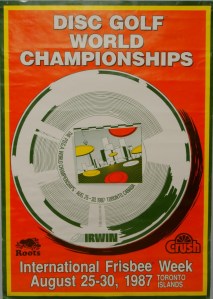
Ken Westerfield retired from the Wham-O National Disc Golf Tour in 1979. After retiring, he produced Irwin-sponsored PDGA Disc Golf competitions at the Toronto Island disc pole hole course. In 1987, Ken Westerfield, with sponsors Orange Crush, Roots, Irwin, and Bob Blakely of the Canadian Frisbee Association, organized the 1987 PDGA World Disc Golf Championships on the Toronto Islands. This was the only time the world championship was held outside the United States.
Ken Westerfield and Jim Kenner were inducted into the World Disc Golf Hall of Fame.
See more on disc golf in Canada…
See more on disc golf in the U.S…
Ultimate Frisbee, Toronto and Vancouver.
“The worth of an athlete is measured not only by victories but also by how they are remembered.”
During the 1960s, Frisbee football emerged as a popular recreational activity in North America. The first ultimate frisbee games played in Canada were at Toronto Islands, Toronto, in 1975, and Stanley Park, Vancouver, in 1977. These events marked the start of introducing ultimate frisbee to Canadians, adding to other tournament activities.
Ken Westerfield and Jim Kenner were key in introducing ultimate frisbee to Canada. Ken participated in these ultimate competitions alongside other disc athletes and promoters, known as ultimate frisbee’s “Johnny Appleseeds.”
From 1977 to 1979, Westerfield spent his winter months in California playing ultimate on a touring Santa Cruz team in the Northern California Ultimate Frisbee League (NCUFL).
In 1978, Jim Kenner and Gail McColl relocated from Toronto to London, Ontario, and began working on establishing a disc manufacturing company called Discraft.
Westerfield, retiring from competing in freestyle, disc golf, and overall NAS competitions in the United States, remained in Toronto to organize frisbee show tours and disc sports competitions in Canada. Due to his passion for ultimate and his desire to play again, Ken initiated Canada’s first ultimate league in Toronto.
In 1979, Ken Westerfield, Bob Blakely (Irwin Toy), Chris Lowcock, and the first four teams founded the Toronto Ultimate League/Club. Ken began organizing weekly ultimate pickup games on Kew Beach, with beach freestylers Patrick Chartrand, Stuart Godfrey, Gary Auerbach, and Jim Lim. Ken utilized his tournament registration contact list by sending league invitations to form teams representing Wards Island, West Toronto, North Toronto, and his Beaches team to join the Toronto Ultimate League/Club. These were the first four teams, with teams taking turns hosting weekly league game nights at their respective home locations.
The league’s opening night took place at Kew Beach. Westerfield would use Bob Blakely’s office copy machine and the mailing facility at Irwin Toy to produce a weekly newsletter. This newsletter highlighted the games, scores for each team, and league standings throughout the playing season. Chris Lowcock took on management and scheduling responsibilities. Ken and Chris developed the Toronto Ultimate League/Club as it grew substantially. In 1987, Ken Westerfield retired from his 25-year career in disc sports, and Chris Lowcock continued as TUC President until 1991.
Today, the Toronto Ultimate Club (TUC), has 3300 active members and over 250 teams playing year-round. This was the first ultimate league in Canada and is now one of the world’s oldest. Ken Westerfield and Chris Lowcock were inducted into the inaugural class of the Toronto Ultimate Club Hall of Fame and the Ultimate Canada Hall of Fame.
See more on ultimate in Canada…
Freestyle Competitions, Toronto and Vancouver, 1974.
“Argue your limitations and you shall have them.” – Jonathan Livingston Seagull.
Freestyle is an event where teams of two or three players perform a routine that comprises a series of creative throwing and catching techniques set to music. The routine is judged based on difficulty, execution, and presentation. The team with the best total score is declared the winner.
The game of Frisbee originally involved throwing and catching a flying disc. Over time, players developed various techniques and styles, which became known as freestyle. During the early days of freestyle, catching the disc would depend on the throw, making it a spontaneous and unpredictable game. Typically, two players would stand 40-50 yards apart, throwing the disc back and forth with fast and varied movements. Occasionally, players would add in a kick or slap-up, but there was rarely any pause between the catch and the return throw. As players became more experienced, the game evolved into a smooth and seamless flow of throws and catches.
For years, Ken Westerfield and Jim Kenner had been playing a fast-flowing trick throw and catch freestyle and were already touring as Frisbee Professionals. In 1973, Westerfield and Kenner, wanting to see if there were other Frisbee freestylers, added their idea of a Frisbee Freestyle competition to the 2nd Canadian Open Frisbee Championships.. Because of a lack of competitors, the freestyle event was canceled. Unknown to Westerfield and Kenner, there was the beginning of a growing Frisbee freestyle interest in the United States centered in Berkeley, California, New York, Ann Arbor, New Jersey, and Chicago. In 1974, at the 3rd annual Canadian Open Frisbee Championships, Westerfield and Kenner introduced the first freestyle competitive event called “Freeform,” attended by the best players from the cities mentioned. Ken and Jim won the first freestyle event. Freestyle was new in the US. Jim and Ken, having played freestyle for years and touring as professionals, came to the competition with a big advantage.
The Decade Awards 1970-75 Top Freestyle Routine: Ken Westerfield/Jim Kenner Canadian Open 1974:
“Considered the greatest speed-flow game of all time. Ken and Jim put on a clinic to cap off a blistering hot final by all the teams. They featured a rhythmic and dynamic style with concise catch-and-throw combinations. These two gentlemen are credited with creating formal disc freestyle competitions. The 1973 Canadian Open did not have freestyle as an event. The end result made history.”
Later that same year, Kenner and Westerfield organized the Vancouver Open Frisbee Championships (1974-1977) at Kitsilano Beach. Along with other Frisbee events, they included their second big freestyle competition, where Bill King, Jim Brown, and John Anthony made their first competitive appearance. The Canadian Open Frisbee Championships and the Vancouver Open Frisbee Championships (1974). This was the beginning of freestyle competition. In 1975, the tournaments in the U.S. began, including Ken and Jim’s freestyle competition as one of their events. For the rest of that decade and into the 1980s, freestyle became the most popular event at multi-disc event tournaments worldwide.
Ken Westerfield and Jim Kenner were inducted into the inaugural Pioneer Class of the Freestyle Players Association Freestyle Disc Hall of Fame.
See more on freestyle in Canada and the U.S.
Frisbee Becomes a Sport.
In 1974, after performing tours for Irwin Toy, Westerfield and Kenner presented an idea to Molson Breweries. They suggested performing frisbee shows during basketball halftimes at Canadian universities as the Molson Frisbee Team.
Molson Breweries, on the lookout for unique ways to enter the university market, agreed to their proposal and were thoroughly impressed with the results. Molson exclusively used their show the following year to launch a new beer brand called Molson Diamond. In 1975, with Molson’s sponsorship, Westerfield and Kenner moved the Canadian Open Frisbee Championships from the Canadian National Exhibition to the Toronto Islands. Molson continued to sponsor their Frisbee shows and events for several years. This sponsorship helped Westerfield and Kenner to popularize their new disc sports.
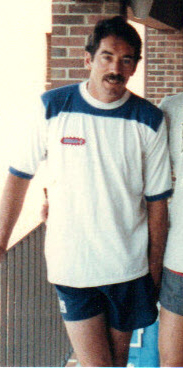
In 1975, Ed Headrick approached Dan Roddick to lead the International Frisbee Association (IFA). Ken Westerfield was also asked to head the Canadian Frisbee Association, but he declined the offer and believed his efforts would be more fruitful outside of an office. Eventually, Irwin Toy established the Canadian Frisbee Association in Toronto. Over the years, the association has had several directors. In the 1980s, Bob Blakely became the first player/director of the CFA. Blakely was already involved in disc sports and successfully organized show tours, appropriated funds, and supported tournaments and teams. Additionally, he coordinated the Jr Frisbee Program across Canada. Blakely and Westerfield were good friends and worked together to promote frisbee and disc sports across Canada in the 1980s.
In the late 1970s, organized disc sports became popular across Canada and the United States. Jim Kenner and Gail McColl moved from Toronto to London, Ontario, and founded a disc manufacturing company called Discraft.
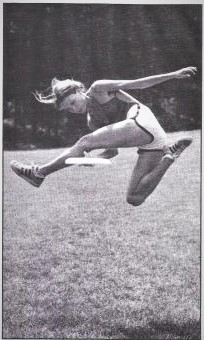
Ken Westerfield and Mary Kathron divide their time between Toronto and Santa Cruz, California, where they started the Good Times Professional Frisbee Show, performing at universities and sporting events in both Canada and the United States. Mary Kathron began playing in the early 1970s, around the same time as Gail McColl. These two Women are the first Women of freestyle. Ken and Mary also performed in several frisbee show tours with Orange Crush, Air Canada, Lee Jeans, and Labatt Brewery. Orange Crush even provided logo-painted vans and motor homes with several touring Frisbee Teams to do shows at fairs, sporting events, shopping malls, and schools across Canada. Bob Blakely, Ken Westerfield, Mary Kathron, Ron Leithwood, Mike Sullivan, Brian McElwain, Kevin Sparkman, Stuart Godfrey, Pat Chartrand, Peter Turcaj, Gary Auerbach, Jim Brown, Bill King, John Anthony, Jack Ognistoff, and Glen Whitlock. They were the touring freestyle performers in the series and helped lay the foundation for disc sports’ continued growth in Canada.
On the West Coast, Scott Lewis started the first organized disc sports in BC, inventing a game called Frisbee Football and organizing several dozen people to play it regularly from 1974 to1976 at Willows Beach in Victoria. In 1985, Jim Brown of Vancouver founded the Westwind Disc Society, that evolved into the Vancouver Disc Sports Society and later the BC Disc Sports Society. This was the first provincially recognized disc sports organization. See more on disc sports in Vancouver…
Jean-Luc Forest and Mike Jones were the co-founders of the Manitoba Organization of Disc Sports. MODS became the first Canadian Ultimate Organization to incorporate. In February 1988, MODS became the first organization to achieve Provincial Sports Organization status. See more on disc sports in Manitoba…
Touring Frisbee shows in the 1970s.
Freestyle, being the first frisbee play, was new and exciting. A few of the top players of the 1970s could create Frisbee shows that would travel throughout the World, performing at fairs, universities, shopping malls, and professional sporting events. 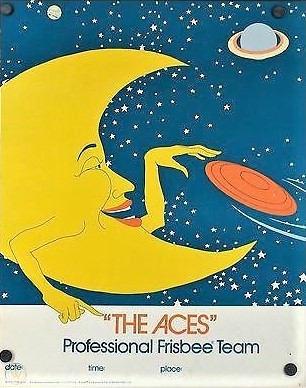 In 1971, Americans Ken Westerfeld and Jim Kenner performed Frisbee street shows in cities across Canada. In 1972, they signed with Irwin Toy, the Wham-O Frisbee licensee in Canada, to tour and promote the Frisbee. Also, that same year, Mike and Bill Schneider, Northern California players, toured for Wham-O Frisbee affiliates in Europe. In the early days of playing with a flying disc, Frisbee shows demonstrated the potential of disc sports.
In 1974, Molson Brewery signed Ken Westerfield and Jim Kenner to perform half-time frisbee shows, as the Molson Frisbee Team, at university basketball games. John Kirkland and Victor Malafronte began performing pre-game frisbee shows for the Harlem Globetrotters. Other touring frisbee shows are Good Times Professional Frisbee Show, Spinning Bees, Frisbee South, Aces, Flying Aces, and The Jammers. These Frisbee demonstrations provided the public with a glimpse into the future of disc sports. Irwin Toy (CANADA) and Wham-O (USA) organized numerous national and international tours. Major companies, such as Coca-Cola, Orange Crush, Copper Tone, Molson, Labatt, Budweiser, and Lee Jeans, sponsored Frisbee shows that reached millions in every city and small town across North America. The early frisbee freestyle shows deserve recognition for their performances and publicity in spreading awareness of this new era of flying disc sports.
Frisbee and Disc Sports Timeline for Canada.
1926–Tin Lid Golf, the world’s first recorded flying disc sport. Disc golf is played with tin lids in Bladworth, Saskatchewan, Canada.
1970–Queen’s Park, Toronto, object hole disc golf course and freestyle play.
1972–Ken Westerfield and Jim Kenner approached Irwin Toy with their idea of promoting the Frisbee. Ken and Jim become the first touring Frisbee Professionals.
1972–1985 The Canadian Open Frisbee Championships introduced modern disc sports. Over the years, sponsors have included Molson Brewery, Orange Crush, Labatt, Roots, and Irwin.
1974–1977 Molson Brewery hired Jim Kenner and Ken Westerfield to perform half-time shows, as the Molson Frisbee Team, at university basketball games.
1974- World’s first freestyle competitions at Canadian Open Frisbee Championships, Toronto, and Vancouver.
1974–The Vancouver Open Frisbee Championships. Kitsilano Beach and Stanley Park.
1975–Irwin Toy created the Canadian Frisbee Association to promote Frisbee sports.
1975–Ultimate is introduced at the four big tournaments: Octad, American Flying Disc Open, World Frisbee Championships (Rose Bowl), and Canadian Open Frisbee Championships in Toronto.
1975–1978–World Class signature Frisbee for Canada.
1975–First modern disc golf competitions in Canada – Canadian Open Frisbee Championships, Toronto Islands, and the Vancouver Open Frisbee Championships in British Columbia.
1977–1985–Several Frisbee show teams tour Canada with sponsors Orange Crush, Air Canada, Lee Jeans, and Labatt Brewing Company.
1977- Ultimate is included with scheduled NAS events at the Vancouver Open Frisbee Championships in Stanley Park.
1978–Discraft manufactures the Sport Disc in London, Ontario.
1979–The Toronto Ultimate Club (TUC).
1980–The first official disc golf pole hole courses were designed and installed. Played as an object course since 1975–18 disc pole holes were installed on Toronto Wards Island, Toronto, ON, and 9 disc pole holes on Pender Island, BC. In 1976, Winskill Park, Tsawwassen, BC, had a 9-hole disc golf course. The poles with baskets were homemade by locals. In the 1990s, they were replaced with official Mach II disc pole holes. In the 1980s, Bob Blakely was appointed the Director of the Canadian Frisbee Association.
1984–The beginning of two PDGA disc golf tournaments. The Disc Golf Challenge and the Toronto Island Open (1984-2012)
1985–Disc Involvement Society of Canada (DISCANADA), which included a publication.
1985–The Labatt’s World Guts Championships, Toronto, Ontario (Toronto Islands).
1985–Westwind Disc Society – the Vancouver Disc Sports Society
1986–Ottawa and Vancouver’s ultimate leagues.
1987–Winnipeg Ultimate League.
1987–The World Disc Golf Championships (PDGA), Toronto, Ontario (Toronto Islands)
1987–Canadian Ultimate Championships (CUC), Ottawa, Ontario.
1988–Manitoba Organization of Disc Sports (MODS). First Provincial Sports Organization founded.
1991–WFDF World Ultimate Club Championships in Toronto.
1993 – Canadian Ultimate Players Association.
See more on disc sports across Canada…
- A complete timeline of disc sports in Canada and the United States.
- History and awards: Decade Awards.
- Instruction: Ultimate United.
- A pictorial history of disc sports: Disc Sports History in Pictures.
- Players organizations and media resources: USA Ultimate | Ultimate Canada | Ultiworld | PDGA | WFDF | Freestyle Players Association | Ultimate Rob | FrisbeeGuru
Resources:
Directory of Ultimate Frisbee Clubs across Canada.
Disc Golf Course Directory in Canada and the World.
The Flying Disc Museum, Frisbees, disc sports, posters, magazines, history, and collectibles.
Next Articles:
Ultimate Frisbee History in Canada
History of Disc Golf in Canada
Freestyle Frisbee History
Note: This information was referenced and time-lined from disc sport historical and biographical articles, including U.S. and Canadian Disc Sports Hall of Fame inductions, Disc Sports Player Federations, and other historical facts.. This article was researched, written, and compiled by historians specializing in Frisbee and disc sports. The history in this document may change as events and people are added.
Reproducing any part of this article, whether in whole or in part, is permitted when proper credit and a link are provided.
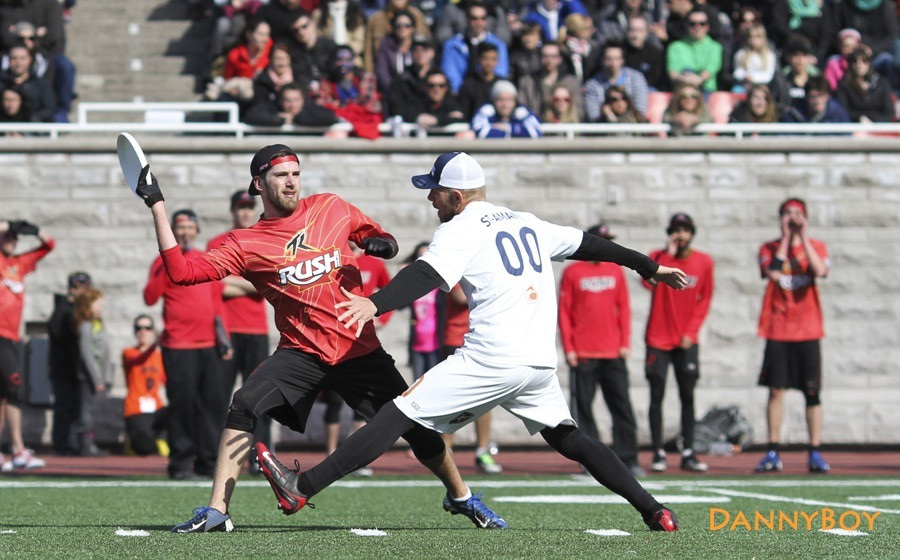
Top feature photo: Mark Lloyd, Toronto Rush, AUDL.
© 2026 Disc Sports History. All rights reserved.
 The History of Frisbee and Disc Sports